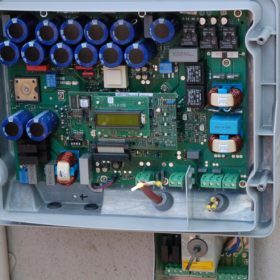
UL Solutions, NREL set cybersecurity standards for distributed energy, inverters
UL 2941 provides testable requirements for energy storage and generation technologies on the distribution grid. The new cybersecurity protocol provides a framework for PV inverters, electric-vehicle chargers, wind turbines, fuel cells, and other distributed resources.
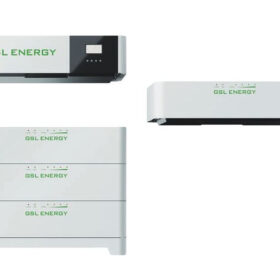
GSL Energy launches all-in-one battery inverters for offgrid applications
China’s GSL Energy has started selling two versions of its new battery inverter, with storage capacities of 10 kWh and 20 kWh. It says the devices have a maximum charging and discharging current of 80 A.
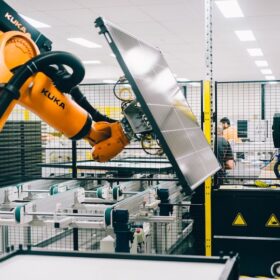
Australia to earmark $10 billion fund to support clean energy manufacturing
Both houses of the Australian parliament have approved plans to establish an AUD 15 billion ($10 billion) national reconstruction fund to support domestic manufacturing in future industries and reduce the nation’s dependence on imports.
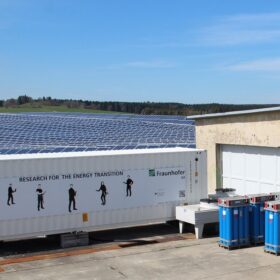
Investigating load scenarios for grid-forming inverters
A consortium led by the Fraunhofer Institute for Solar Energy Systems (ISE) will test grid-forming inverters at a large-scale PV facility in southern Germany. The aim of the first tests is to examine the performance of the devices under real operating conditions, stress factors, and typical stress profiles.
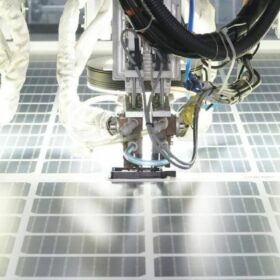
Reshoring of US solar manufacturing
The Solar Energy Industries Association’s (SEIA) latest white paper on solar and storage manufacturing includes an interactive map. It shows that momentum has started to build for a transformational expansion of domestic solar and storage manufacturing.
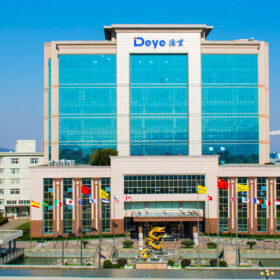
Deye to build two new inverter factories totaling 18 GW
The Chinese inverter maker plans to build both new factories in China’s Zhejiang province.
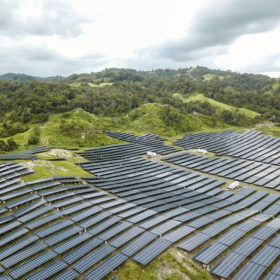
Weekend Read: Floating the solar dream
Indonesia is a coal-dependent country in which conventional power grids are problematic. The archipelagic nation is turning to floating PV (FPV) to help accelerate its energy transition. Sorta Caroline takes a look at the state of play for water-borne solar and the problems that still need to be overcome.
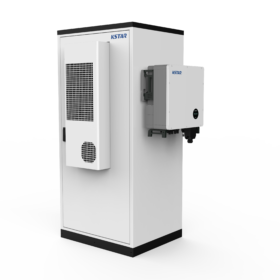
KStar unveils battery inverter solution for C&I applications
KStar’s new all-in-one energy storage system for commercial and industrial (C&I) applications features a 5.12 kWh lithium iron phosphate (LFP) battery system with a 50 kW inverter. It includes two clusters of batteries with 10 modules each, for a maximum capacity of 102.4 kWh.

BayWa re to sell PV product distribution business
BayWa AG is strategically realigning BayWa re so it can sell its solar trade business. In the future, the subsidiary will focus on international projects as an independent power producer (IPP).
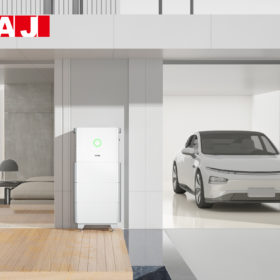
SAJ unveils new line of residential battery inverters
China’s Guangzhou Sanjing Electric (SAJ) has developed a new line of battery inverters in single-phase and three-phase configurations.
