
Germany records 453 hours of year-to-date negative electricity prices
Germany has logged 453 hours of negative day-ahead power prices this year, already above the total in 2024, while hours above €100 ($116.,54)/MWh have also surpassed last year.
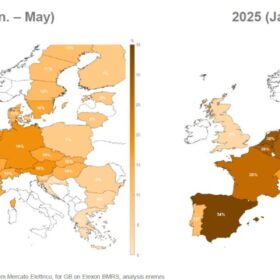
Negative price hours rise in Europe
Around 28% of potential solar power generation in Germany occurred during periods of negative electricity prices from January to May, according to Enervis. The share is expected to rise as battery storage deployment continues to lag behind renewable energy growth.

Germany’s day-ahead market posts 389 hours of negative prices in H1
Germany recorded 141 hours of negative day-ahead electricity prices in June, just below the record set in May, bringing the first-half total close to the full-year figure for 2023.

France records negative power prices for most of May
France recorded negative electricity prices on most days in May, with the monthly average falling to €19 ($21.70)/MWh, the lowest since April and May 2020. Daily prices averaged as high as €69/MWh and as low as -€13/MWh.
Germany introduces new rules for solar remuneration during negative prices
The new provisions will apply to all PV systems exceeding 2 kW.

Germany records 457 hours of negative electricity prices in 2024
Germany’s Federal Network Agency (Bundesnetzagentur) says negative wholesale electricity prices occurred for 457 hours in 2024, up from 301 hours in 2023.

Storage, hydrogen, and demand flexibility key to avoiding negative prices
Antonio Delgado Rigal, CEO of Spain’s AleaSoft Energy Forecasting, speaks with pv magazine about the rise in negative price hours in major European energy markets. He emphasizes the need for more storage capacity and argues that negative price periods will probably not threaten project profitability over the long term.
France records 233 hours of negative electricity prices in H1
KiloWattSol, an independent solar consultancy, says there were 308 hours of negative electricity prices from the start of 2024 to Aug. 23 – more than double the 147 negative hours recorded in 2023.
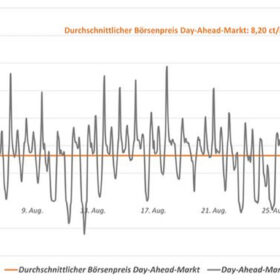
German energy market caps turbulent August with 68 hours of negative prices
Rabot Charge, a German renewable energy supplier, says the average spot electricity price in August rose slightly from July to €0.082 ($0.09)/kWh. The increase was due to a slightly below-average share of renewable sources in grid electricity.
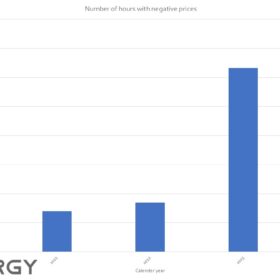
Netherlands posts more negative energy prices
The Netherlands has recorded more hours of negative energy prices between Jan. 1 and Aug. 17 than it did in all of 2023. Dutch research firm Stratergy has noted a clear correlation between expected solar and wind energy and negative hourly prices in the day-ahead market.
