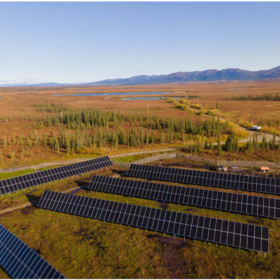
Deploying solar, storage, heat pumps in the Arctic
US researchers have conducted case studies on the successful deployment of distributed renewables in the state of Alaska. In one study, two cities installed 223.5 kW solar PV arrays coupled with 351 kWh batteries and 250 kW inverters, in addition to cold climate heat pumps.
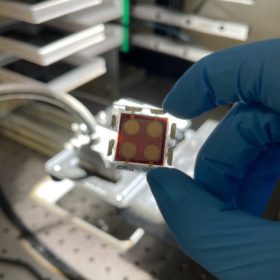
New method brings durability of perovskite solar cells closer to silicon
Researchers from the United Kingdom, the United States and Australia have reportedly developed a perovskite solar cell with comparable stability and durability to commercial silicon PV cells. They used a high-temperature processing method with dimethylammonium chloride to control the intermediate phases of perovskite crystallization.
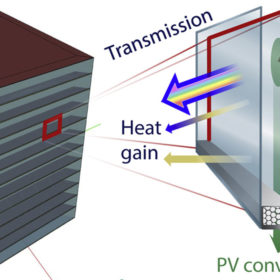
PV windows cut energy use by 40% in glazed buildings, says NREL
The US National Renewable Energy Laboratory (NREL) has shown that perovskite-based thin-film PV, transparent PV, and dynamic PV glazing technologies can reduce the energy use of glazed buildings by around 40% across eight regions in the United States.

Canada set to hit 5 GW milestone
Canada is set to install 500 MW of new solar in 2022, bringing its total capacity to about 5 GW, according to data from Canmet Energy. The country is expected to hit 35 GW of total solar capacity by 2050.
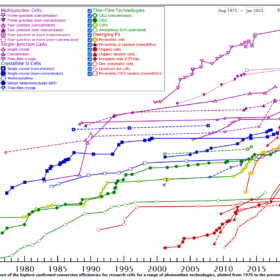
NREL updates interactive chart of solar cell efficiency
The US National Renewable Energy Laboratory (NREL) has released a new, interactive version of its research cell efficiency chart for a range of PV technologies.
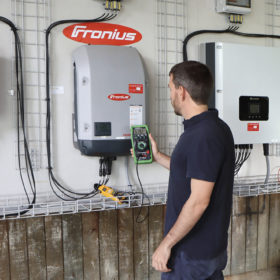
Weekend read: Elusive longevity
The expected lifetime of PV inverters is significantly shorter than that of modules. In many projects, inverter replacement is included in financial calculations from the start, despite the high costs. Research is being conducted into the causes of faults to develop more durable inverters and components. But plant design can already improve the lifespan of inverters in use today, reports pv magazine Germany’s Marian Willuhn.
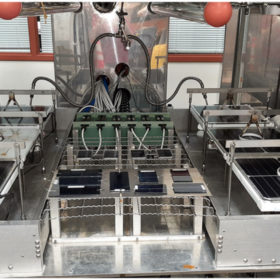
Putting bifacial modules to the test
US scientists recently put different bifacial solar cells and modules through a series of tests at elevated temperature, humidity, voltage and mechanical stress levels. The tests revealed a range of light-induced and potential-induced degradation mechanisms that modules will likely suffer in the field.
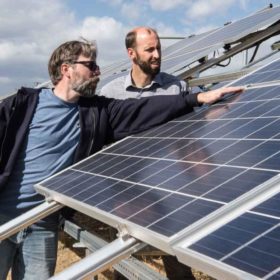
PV modules with longer lifetimes could slash demand for materials, says NREL
The US National Renewable Energy Laboratory (NREL) says in a new report that PV module lifetime extensions should be prioritized over closed-loop recycling to reduce demand for new materials.
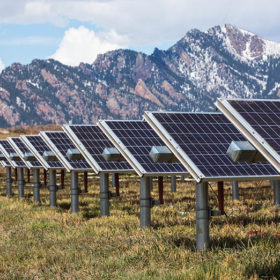
Cooling down solar modules by increasing space between panel rows
A US research team claims to have demonstrated that increasing the spacing of solar panels between rows improves PV system efficiency and economics by allowing airflow to cool down the modules. The method could improve a project’s LCOE by as much as 2.15% in certain climates.
How to get to 100% emissions-free electricity
The National Renewable Energy Laboratory is exploring different paths to 100% emissions-free electricity in the United States.
