
A quantum dot solar cell with 16.6% efficiency
Scientists at Australia’s University of Queensland have set a new world efficiency record for a quantum dot solar cell. The group fabricated a 0.1cm² device from a perovskite material and measured power conversion efficiency at 16.6%. The record has been verified by the United States National Renewable Energy Laboratory.
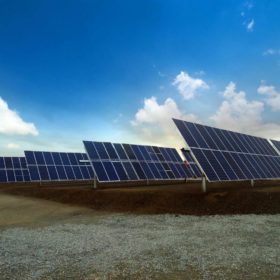
Discussing bifacial project economics
Bifacial solar module technology will find beneficial application in a significant number of solar energy power plants, according to a technical assessment conducted by ArcVera Renewables. While advertised 25% or greater gains in energy yield are unlikely for most projects, typical project energy production gains are 3-10%. Analysis finds that many projects under the scrutiny of informed technical due diligence, proper measurement and site design, will reap meaningful net present value. Although financing institutions have recently not awarded significant debt financing value to bifacial projects, full credit for bifacial benefits are expected to accrue rapidly, as experience and market penetration increases.

Innovative PV modules at Intersolar San Diego
In sunny San Diego for Intersolar 2020, we’re seeing a new idea for tracking rooftop solar modules, diodes moving to cell level, two types of building-integrated solar products and some solar hot water.
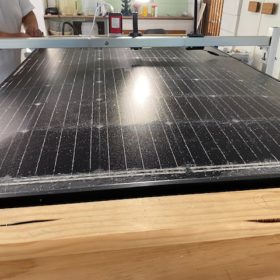
Solarwatt’s Vision glass-glass PV passes Australian cyclone testing
Solarwatt’s Vision glass-glass solar PV modules have pushed the technology’s resilience even further after passing cyclone testing in Darwin, Australia.
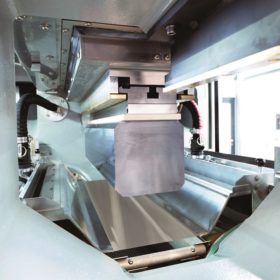
MIT researchers put slimmer silicon back on the table
With solar grade polysilicon prices having plummeted in recent years, cutting down on consumption of the material has not been a priority. But strategies exist and significant savings can be made through deploying thinner wafers that use less silicon, insists a new paper published by MIT and NREL. And as manufacturers are increasingly hitting dead ends on other routes to cost reduction, this option could be back on the table for many.

Solar cells from space are on the way
A team at the U.S. National Renewable Energy Laboratory has come up with a new process that would reduce the production cost of highly expensive – and highly efficient – gallium arsenide cells.
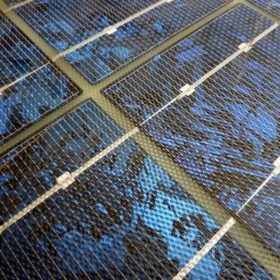
US scientists claim clear-sky irradiance model provides better results for module testing
Researchers at the American Institute of Physics have used the clear-sky irradiance model developed by the National Renewable Energy Laboratory to measure the degradation rates of solar panels at a testing field in Germany over five years. The scientists say the model, when combined with real-world data, offers an efficient tool to evaluate the aging of PV technology.
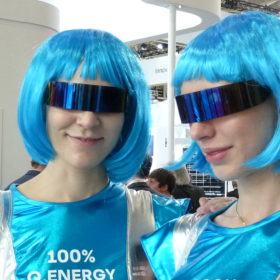
The year in solar, part II: A lively show season, more legal shenanigans and rising panel efficiencies abound
Intersolar Europe is always a key date in the solar calendar but this year’s show had it all, including three panel-smuggling arrests. Elsewhere, wafers were getting bigger, efficiency records were tumbling and new technologies were emerging. There was also more news on the solar car ports fad and Hanwha’s ongoing legal tussle.

Aquavoltaic potential in Taiwan
Scientists have developed a new mathematical model which indicates floating solar on fish farms could be a lucrative option in land-scarce Taiwan. Although floating arrays could hinder fish production, the losses would be largely compensated by electricity-related income.

US research lab rewires solar cell efficiency to 27.3%, sees path to greater than 32%
NREL has published a paper showing an experimental solar cell, with a unique technique for wiring two separate solar cells into one, that increased the cell’s efficiency by 4%. The document also offers a respectable review of other technologies being developed.
