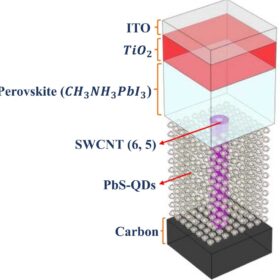
Perovskite PV cell hits 19.9% efficiency with single-walled carbon nanotube
Iranian researchers have improved perovskite solar cell efficiency by using a single-walled carbon nanotube as a hole transport layer surrounded by lead sulfide colloidal quantum dots.
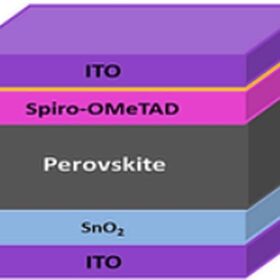
Bifacial perovskite solar cells for indoor applications achieve 30.3% efficiency
Scientists in India have fabricated indoor bifacial perovskite solar cells that purportedly achieve remarkable power output per single cell. The devices also reached a bifaciality factor of 0.73.
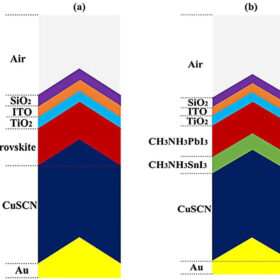
New perovskite solar cell design with silicon dioxide anti-reflector layer
Researchers in Iran have designed a new light trapping (LT) structure for perovskite solar cells that reportedly achieves optimal light absorption without impacting the electrical properties of the cells. The key element of the device is an anti-reflector layer based on silicon dioxide (SiO2) that improves light harvesting and charge extraction performance.
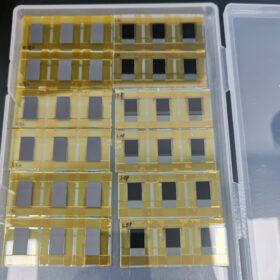
Printable mesoscopic carbon perovskite solar cell achieves 17.13% efficiency
Scientists in China have built a tandem bifacial mesoscopic perovskite solar cell via a new passivation strategy. The cell achieved an improved power output and voltage, and the researchers said it offers potential applications in practical usage.
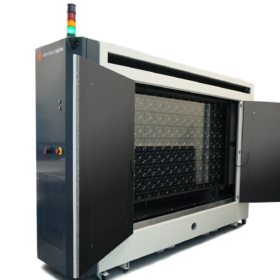
Unlocking PV perovskite measurement with LED solar simulation
With perovskite PV technology showing promise for next-generation solar manufacturers, LED steady-state solar simulators have the flexibility to provide perovskite developers with the measurement accuracy required.

Inverted perovskite solar cell based on methyl-substituted carbazole HTL achieves 20.1% efficiency
Indian scientists built an inverted perovskite PV device that uses a self-assembled monolayer to suppress nonradiative recombination at the interface between the perovskite absorber and the hole transport layer. The cell achieved remarkable efficiency and was also able to retain the initial efficiency rating for 3,00 h.
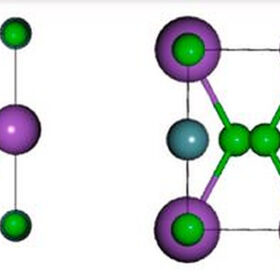
New perovskite material for lead-free solar cells
An Algerian research group has analyzed the electronic, elastic, optical, and thermoelectric characteristics of the KGeCl3 perovskite to verify if this lead-free material may be used for solar cells and other electronic devices. The scientists found that the novel material has a direct bandgap semiconductor with bandgap energies of 0.92 eV, 1.26 eV, and 1.88 eV for cubic, tetragonal, and orthorhombic phases, respectively.
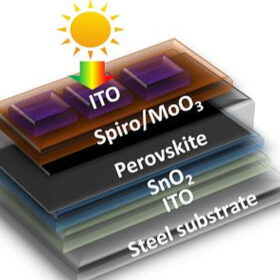
Perovskite solar cell built on steel substrate achieves record efficiency of 17.1%
Scientists in Australia claim to have achieved the highest efficiency ever reported to date for a perovskite solar cell built on a steel substrate. They utilized an indium tin oxide (ITO) interlayer between the steel substrate and the cell in order to avoid iron diffusion from the substrate into the PV device.
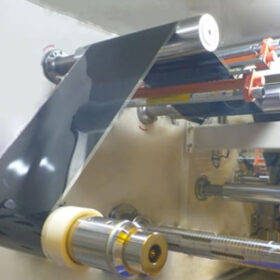
Sekisui Chemical unveils plan to produce solar thin films based on perovskite
A spokesperson from the Japanese plastics maker told pv magazine that production is currently being carried out at a small facility in the laboratory, and that the location of a full-scale production facility is currently under consideration.
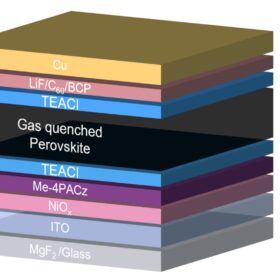
Imec presents inverted perovskite solar cell with 24.3% efficiency
The researchers of the Belgian research institute used a dual-layer treatment for the perovskite absorber, which they said improved the cell efficiency and stability. The device achieved an open-circuit voltage of 1.17 V, short-circuit density of 24.5 mA/cm2, and a fill factor of 84.6%.
