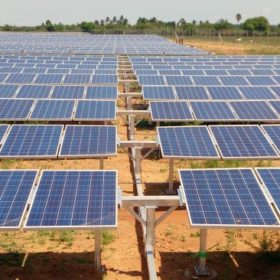
Covid-19 pandemic puts 150 GW of PV, wind at risk in Asia
Up to 150 GW of PV and wind projects could be postponed or canceled throughout the Asia-Pacific region by 2024 if the coronavirus-triggered recession continues beyond the current year, according to new research by Wood Mackenzie.
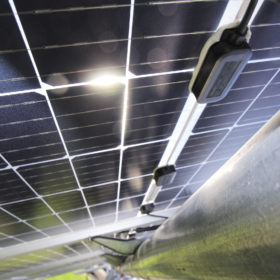
Nextracker the largest tracker provider in 2019
The ten largest solar tracker companies accounted for 88% of the market last year, according to analyst WoodMackenzie, with the market growing 20% from 2018.
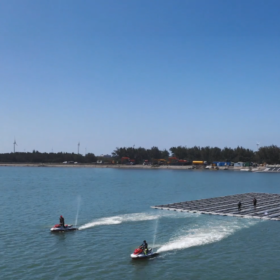
Financial close for 181 MW floating PV plant in Taiwan
The installation will be located in the Changbin Lunwei East district. A NT$7.2 billion loan was secured from a consortium of seven banks and the solar facility is expected to be grid-connected this year.

How much dust is enough?
A U.K. study has identified 13 soiling agents with differing effects on light transmittance. Researchers found some dust particles were able to degrade photovoltaic performance by as much as 98%.

New all-black module with output of 400 W
Solaria says that it will start selling its new all-black panel for residential PV applications in the U.S. market within the current quarter. The monocrystalline module is equipped with a microinverter from Enphase and has an efficiency rating of 20.2%.

More than 100 GW of solar in the Netherlands? Possible by 2050
Solar capacity is expected to grow to unthinkable levels in the tiny country, according to a new report by Netbeheer Nederland. Under one scenario in which regional governments and companies would take the lead in the energy transition, cumulative solar capacity could reach 125 GW. Under a second scenario, in which growth would be driven by the central government, total PV capacity could hit 106 GW.
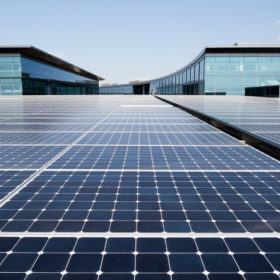
SunPower pauses its solar cell and module factories, reduces salaries and workweek
The solar efficiency leader remains on track to complete its planned split into two independently focused pure-play solar companies by the end of the second quarter.
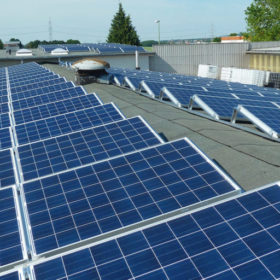
Germany has 200,000 solar-plus-storage systems
EuPD Research estimates around 65,000 energy storage systems linked to rooftop PV were installed last year thanks to increasingly popular solar arrays and electric vehicles as well as rising electricity prices.
Renewables PPA signed in Spain despite Covid-19 disruption
Portuguese electric utility EDP will supply power to Dutch nutrition, health and sustainable lifestyle multinational Royal DSM. The agreement relates to 59 MW of solar and wind generation capacity.

Australian researchers take solar windows to the next level
The building-integrated PV devices have taken a big leap forward on the back of a partnership between Australian scientists and a major glass manufacturer which will investigate the use of semi-transparent solar cells in commercial applications, potentially revolutionizing building design.
