
Ireland may allocate 796 MW of solar in first renewables auction
The government has announced the provisional results of the nation’s first renewable energy procurement exercise and says the 1 TWh auction will end up allocating more than 2.2 TWh of generation capacity for an average final electric price of €0.07408/kWh.
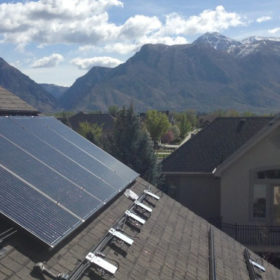
Enphase Q2 micro-inverter revenue falls despite demand ‘rebound’
Coming off a strong, profitable first quarter, Enphase sees the second-quarter results of Covid-19 in compressed revenue and a swing to a loss. Gross margins remain strong.
Chinese PV Industry Brief: PV glass supply deals, bonds to finance solar incentives
Two solar glass makers kicked off the week with new deals and solid earnings reports while the Chinese government revealed it may issue bonds to fund clean energy incentives.

CPV panels for agrivoltaics
Swiss startup Insolight has raised €4.6 million to bring its concentrating PV module technology to commercial production. The panels have a claimed efficiency of 30% and power output of 160 W. Originally conceived for rootop solar, the product is now being recommended as an interesting option for agrivoltaic projects.

SolarEdge up 12% after hours on second-quarter revenue and solid earnings – despite Covid-19
The inverter and energy storage company was able to maintain its streak of profitable quarters in what was expected to be a hard period for solar and the Israeli business said it sees “signs of recovery in the U.S.”

Value of Indian PV imports tanked 83% in second quarter
Mercom India Research has said the quarterly value of solar cell and module imports was down 83% in the second quarter of the year, compared to the same period of 2019, to sit 54% lower than the value recorded in the January-to-March window.
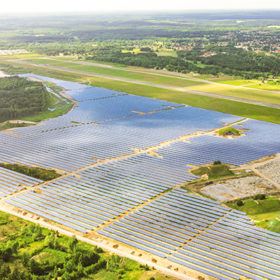
Suntech to reach 10 GW of module capacity this year
The Chinese manufacturer has completed the first, 1.5 GW phase of a 10 GW expansion plan. It will deploy another 4 GW phase by the end of this year at two new facilities in China’s Jiangsu province.
Green hydrogen economy assessment for US, Europe
A new report by the International Council on Clean Transportation provides forecasts for green hydrogen prices by 2050. The group claims to have included system costs that have been ignored in green hydrogen economy assessments thus far. Average green hydrogen prices, however, will almost be halved in the United States and Europe.
South African chemicals producer seeks bids for 20 MW of PV
Sasol plans to power its operations in the municipalities of Secunda and Sasolburg with two 10 MW solar projects. The successful bidders with sell power to the factories under power purchase agreements.

Albanian utility set to move forward with 12.9 MW floating PV project
Korporata Elektroenergjetike Shqiptare began development of the €13.9 million facility in December 2018. The European Bank for Reconstruction and Development is considering lending €9.5 million to a project which it is said would help reduce the electric company’s reliance on hydro revenues.
