
Fifteen-year PPA for 150 MW solar project in US
Plans to build the 150 MW Cabin Creek solar farm are now set to move forward, now that developer Clenera has secured a 15-year power purchase agreement with Basin Electric Power Cooperative.

Austria doubles financial support for solar rebates
The government has ramped up its budget for the rebate scheme to €10 million.
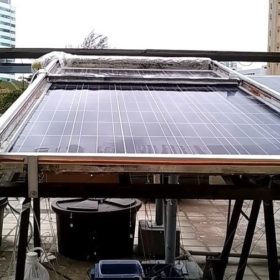
Self-cleaning PV system with active cooling tech
An international research group has developed a self-cooling PV system featuring a 250 W 60-cell polycrystalline module and a thermal collector attached to the back side of the panel. The cleaning tech is based on a microcontroller programmable integrated circuit, which controls a rotating DC motor.
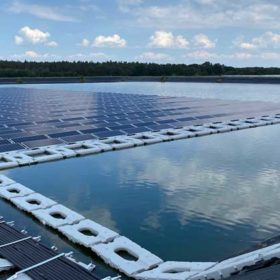
Floating solar park begins commercial operations in Germany
Developer 7C Solarparken has deployed a 729 kW floating system on a lake near Salzwedel. Power trader Next Kraftwerke will integrate power generated at the site into its virtual power plant.
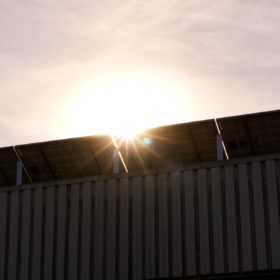
European consortium bid to bring 25.4%-efficient heterojunction-IBC solar cell into mass production
The EU-funded Nextbase project aims to manufacture heterojunction, interdigitated back-contact solar modules for less than €0.275/W. Solar panels featuring the Nextbase cell tech are expected to have a conversion efficiency of 23.2%, according to the European Commission.

Low-cost direct solar-to-hydrogen ambitions see the light
The road to cheap hydrogen production is riddled with potholes and energy losses. Researchers in Australia have demonstrated rethinking solar technology and skipping electrolysers could hold great promise for reaching the hydrogen holy grail.

Poland to reach 7.8 GW of cumulative PV by 2025
A new report by Instytut Energetyki Odnawialnej shows how Poland will deploy more large-scale PV. Growth is expected to be high in the 2021-22 period, with new capacity additions set to hit 2.8 GW.
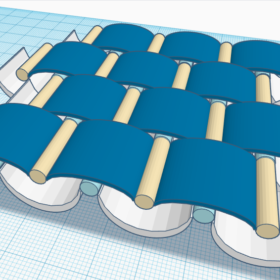
Parabolic bifacial module with active cooling system
Scientists in Morocco have designed a new bifacial module with a cooling system, based on bifacial parabolic solar cells that are connected to each other via tubes for panel cooling. They are now patenting the tech, but have yet to manufacture an initial prototype.

Italy installed 115 MW of PV in Q1
The country installed 10 MW more solar in the first three months of the year than it did in the same period a year earlier. Its cumulative capacity surpassed 21 GW by the end of March.
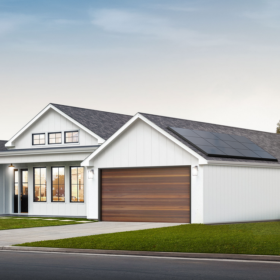
Tesla now claims ‘lowest price for home solar’ – but process is ‘full of pitfalls’
Tesla has decimated its solar business from installation peaks of years past and its market share lead has long been surrendered to Sunrun and others. In December, it claimed it would install 1,000 building-integrated solar roofs per week – a figure it has not come close to achieving in six months. Is this any way to run a solar business?
