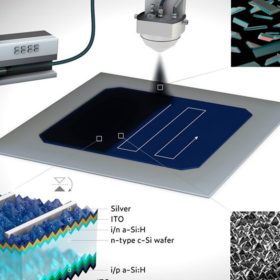
KAUST researchers achieve 20.1% efficiency in heterojunction solar cell based on 2D MXenes electrodes
The solar cell is based on the titanium carbide MXene and is claimed to have retained around 99% of its initial efficiency for more than 600 days of ambient air storage. The device was built using spray coating to directly deposit the titanium carbide flakes on the cell’s rear side.

Paving the way for green hydrogen certification
The International Renewable Energy Agency has outlined a series of technical considerations for green hydrogen tracking systems. According to the document, a degree of flexibility should be taken into account in the short term to ensure that the nascent green hydrogen market can develop.

India surpasses 50GW of solar
In the fourth quarter of 2021 alone, solar developers added 3.2GW of new PV installations in India.
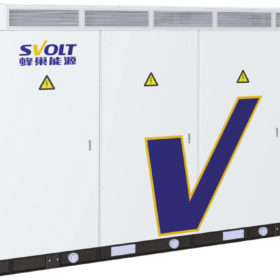
Svolt unveils new storage solutions for residential, commercial PV systems
The Chinese manufacturer has presented new products based on its lithium-iron phosphate battery technology. Their capacity ranges from 10.6 to 639.6kWh.
Italy begins loosening permits for large scale renewables
The Italian government has decided to unlock 1.4GW of new renewable energy projects since the end of 2021.
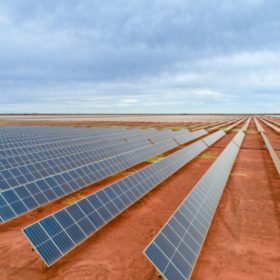
World’s biggest solar-plus-battery project gets funding boost
Sun Cable’s ambitious plans to build the world’s largest solar PV and battery energy storage project in Australia’s remote far north are a step closer to fruition after two of the nation’s richest men provided support for a AUD 210 million ($152.2 million) capital raise.
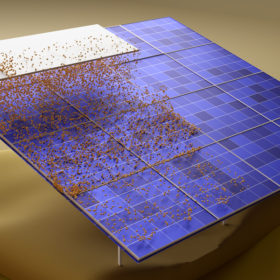
MIT scientists develop PV cleaning system based on electrostatic repulsion
Scientists from the Massachusetts Institute of Technology have developed a system that can be operated at a voltage of around 12V, with a 95% recovery rate for lost power after cleaning. The waterless system can be operated automatically via an electric motor.
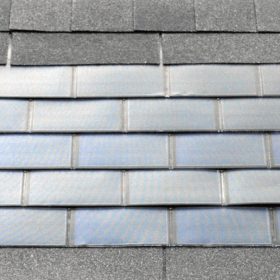
Chinese PV Industry Brief: 50 GW plan for rooftop, BIPV
Elsewhere, Wafer manufacturer Shangji Automation has secured a long-term wafer supply agreement from cell maker Aiko Solar and wafer maker Zhonghuan Semiconductor reported record revenue for 2021. Furthermore, GCL-Poly appears to have backtracked on its plan to rename the business GCL Technology
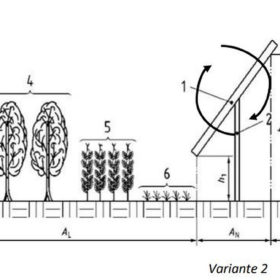
Italian solar sector defines standards for agrivoltaics
A document compiled by three Italian renewables associations identifies with extreme precision the area that is allowed to be used for power generation in the two most common agrivoltaics configurations — solar arrays with elevated solar modules and PV systems deployed between crop rows.
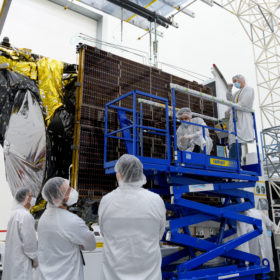
The Solar Tech Check: PV in space, and thin films stride forward
This week has seen NASA announce the completion of a new folding array set to power a mission deep into our solar system, while scientists continue to work on new applications to take such explorations even further from the sun. New measurements also promise routes to higher efficiency in cadmium-telluride PV, and details emerge of one of thinnest solar cells seen so far.
