
Competition heats up
Oversupply is hitting some solar manufacturers hard but grid constraints and labor shortages are unlikely to hold the solar industry back in 2024.

Exploring the depths of Italy’s oldest BIPV project
Scientists have assessed the performance of Italy’s first publicly funded BIPV project, which was installed in 2001. Their analysis shows that only one of the 10%-efficient panels in the 11 kW array experienced a severe fault that caused the complete loss of functionality.
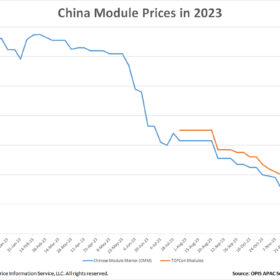
China module prices slide to new record low, manufacturers cut production
In a new weekly update for pv magazine, OPIS, a Dow Jones company, provides a quick look at the main price trends in the global PV industry.
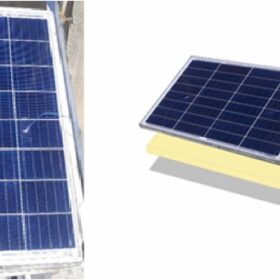
Reducing PV module temperature with beeswax, paraffin wax
Scientists in Iraq have applied two different kinds of phase-change materials to lower the operating temperatures of PV panels. Their experiment showed that beeswax and paraffin wax are particularly effective in achieving this goal, even when they are combined together.
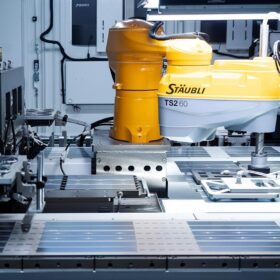
Chinese PV Industry Brief: Tongwei, Canadian Solar announce new factories
Tongwei is planning a cell and module factory in the Sichuan province, while Canadian Solar is setting up a new wafer factory in the Jiangsu province.

Polysilicon prices could hit all-time low by year-end
Bernreuter Research says in a new report that it expects polysilicon prices to soon dip below the historical low of $6.75/kg, which was reached in June 2020. It says global polysilicon capacity could hit 2.95 million metric tons (MT) by the end of December, with just 200,000 MT of the total outside of China.
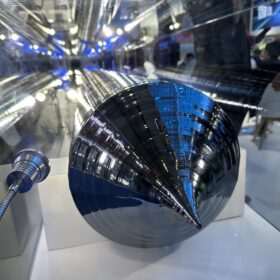
Chinese PV Industry Brief: Polysilicon prices continue to slide
Polysilicon prices fell by as much as 3.23% in China this week, according to the China Nonferrous Metals Industry Association (CNMIA).

REC closes Norwegian polysilicon production facilities
Solar manufacturer REC blames high electricity prices for the recent closure of two Nordic polysilicon production facilities.
Solar module prices may reach $0.10/W by end 2024
Tim Buckley, director of Climate Energy Finance, speaks to pv magazine about the current steep trajectory of solar module prices. He estimates that PV panels prices will end up dropping by 40% this year and predicts the closure of old technology and sub-scale solar manufacturing facilities, both in China and globally.
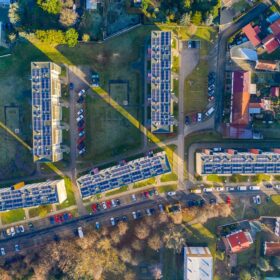
Chinese PV Industry Brief: Total residential PV capacity hits 105 GW
China’s National Energy Administration (NEA) says the nation deployed 33 GW of new residential PV capacity between January and September, bringing cumulative installations to 105 GW, while Flat Glass says it will invest $290 million in new glass factories in Indonesia.
