An ever-changing market: Delving into the heart of power purchase agreements
Cross-border VPPAs expose corporates to Basis Risk, causing settlement price gaps and weakening confidence in these hedging tools, contributing to a 35% drop in European PPA signings in 2025 amid complex market conditions. The market is shifting toward more structured, domestic, and hybrid PPAs, supported by BESS and modern IPPs, to better manage risk and realign buyers, sellers, and lenders.

Solar, wind PPA prices continue to fall in Europe
LevelTen Energy says solar and wind power purchase agreement (PPA) prices in Europe continued to fall in the fourth quarter of 2025, with the most competitive percentiles in Spain below €30 ($35.65)/MWh, reflecting strong downward pressure.
Uncertainty looms as U.S. solar PPA prices climb for second straight quarter
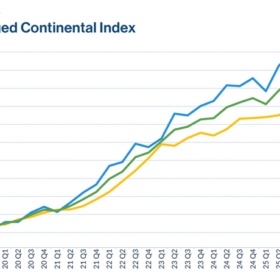
A report from LevelTen Energy finds solar PPA prices in North America rose 3.2% in Q4 2025, marking a nearly 9% year-over-year increase as developers and buyers navigate a complex “post-OBBBA” regulatory environment.
European PPAs held back by diverging price expectations, says Pexapark
Pexapark has attributed a slowdown in the number of power purchase agreements (PPAs) signed across most of Europe’s leading markets to a lack of pricing consensus between buyers and sellers.

Saudi Arabia signs 5 solar PPAs totaling 12 GW
Saudi Arabia has inked five solar power purchase agreements (PPAs) with a developer consortia led by ACWA Power covering 12 GW of new capacity. Alongside two wind PPAs totaling 3 GW, the seven projects have been billed as the largest renewable energy capacity signed for in a single phase globally.
Pexapark reports significant slowdown in European PPAs in May
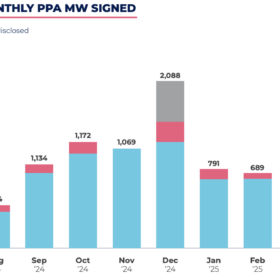
European power purchase agreement (PPA) activity slowed sharply in May, with only 12 deals totaling 232 MW, marking the lowest monthly volume since 2020, according to data from Swiss-based analytics firm Pexapark.

The challenge of truly clean-powered operations
Growing corporate interest in hourly matching power purchase agreements (PPAs) is expected to drive the pairing of PV, wind, and battery energy storage systems (BESS), with potential broader impacts on the energy procurement market, as Neil Ford reports.
Axpo offtakes 60 MW from Hungarian solar plants
Swiss power producer Axpo has signed its first power purchase agreement (PPA) in Hungary for three solar plants that began operations in 2024.
Powering the AI revolution
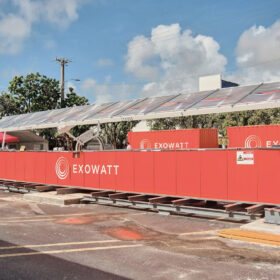
Developers from the renewable energy and data center markets are working to find common ground to meet surging energy demand fueled by the artificial intelligence boom.
Corporate PPAs with variable price structure achieve higher performance
Researchers in Portugal have simulated 800 power purchase agreemeents across eight different contract type and have found that contracts with a variable price structure achieve higher performance. Their analysis considered net present value, contract performance deviation and volume residual as the main indicators.
