
New technologies, new opportunities
UK-based analyst Exawatt and Germany’s Nexwafe published a white paper this week that takes a close look at the current state of PV manufacturing worldwide, and how Nexwafe’s innovative wafer production tech might fit into it. They said that if the potential of its Epiwafer can be realized, the PV industry may yet see “another revolution in wafer manufacturing.”
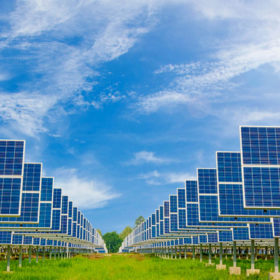
Chinese Industry Brief: Risen plans RMB44.65 billion for solar expansion along supply chain
Furthermore, speaking about its joint venture with Trina Solar for the development of 15GW of ingot manufacturing and 15GW of wafer cutting projects, Tongwei said all work will be finished and put into production in H1 2022. PV prices are also seeing declines along the solar supply chain.
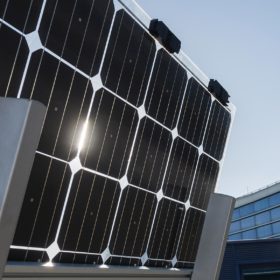
2021 and beyond: European solar manufacturing must shine again
As 2021 ends, we enter a period of reflection and preparation. The ongoing pandemic has brought supply chain disruption, while the increasingly severe effects of the climate crisis loom over us. This winter, Europeans are struggling through unprecedented energy costs, driven by extremely high global gas prices. A year of difficulties has shown that Europe, more than ever, must accelerate the deployment of renewables to provide our economy with reliable, low-cost, and clean energy.

The weekend read: PV manufacturing meets big data
As PV manufacturing lines continue to get larger, keeping track of the measurement data that’s vital for quality and process control becomes an ever more herculean task. Flashing equipment supplier h.a.l.m. has developed a software solution that keeps all of this data in one place and provides operators with a real-time view of production line performance and quality. pv magazine caught up with Managing Director Michael Meixner to discuss the latest on big data in PV manufacturing.

ESMC criticises lack of solar manufacturing in Euro recovery plans
The trade body has highlighted a lack of explicit PV industry support in EU member states which already host domestic manufacturers, such as Germany, France, Austria, Belgium and Lithuania, and says the focus on green hydrogen could exacerbate the solar trade deficit with Asia.

Chinese PV Industry Brief: Tongwei and Jinko team up, as NEA sets new 2030 targets
China’s National Energy Administration expects renewables to represent 40% of the nation’s energy consumption by 2030, and proposed new targets for local and regional government authorities. On the manufacturing side, Tongwei and JinkoSolar announced plans to deepen their strategic cooperation, and Huadian Group has launched its first tender this year for 7GW each of modules and inverters.
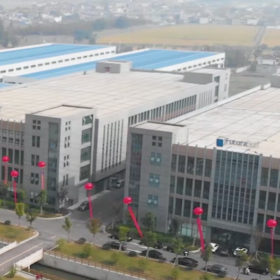
Futurasun doubles production capacity to 1 GW
The module manufacturer has opened its second 500 MW factory in China.

EU wants lithium self-sufficiency by 2025
As the bloc pushes its digital and green transition agenda, policymakers have looked at the raw materials required. Little is mined, processed or assembled in Europe at present but the European Commission has a plan…
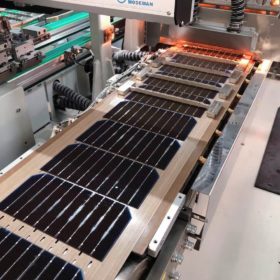
Half-cut, bifacial, 20.5%-efficient PERC modules from Vietnam
Chinese solar manufacturer Dehui is planning mass production of 12-busbar bifacial panels based on 182mm wafers from next year.
Suntech to reach 10 GW of module capacity this year
The Chinese manufacturer has completed the first, 1.5 GW phase of a 10 GW expansion plan. It will deploy another 4 GW phase by the end of this year at two new facilities in China’s Jiangsu province.
