Alpex Solar launches highly oversubscribed IPO
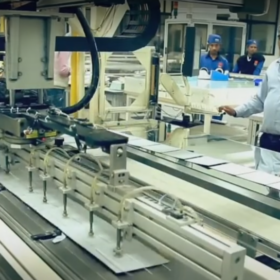
Alpex Solar, an India-based solar manufacturer, says it plans to use the proceeds of its highly oversubscribed initial public offering (IPO) to expand its PV panel capacity from 450 MW to 1.2 GW, in addition to setting up an aluminum frame manufacturing unit.
Malaysian researchers claim reflectors for PV modules are feasible
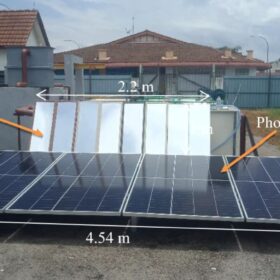
The research team tested a PV system prototype with a mirror reflector and found it could be economically feasible “under Malaysian climatic conditions.” Their analysis was based on the cost-effectiveness factor (FCE), which is a parameter that must be considered when designing an enhancer such as a reflector or a cooling technology in PV systems.
Qcells, Solarcycle aim to jointly recover 95% of solar panel value
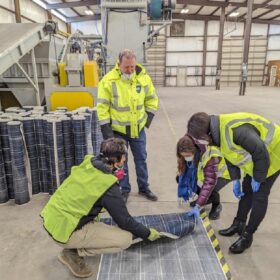
Qcells and Solarcycle have established the first US solar recycling alliance.
New research sheds light on results achieved by major perovskite solar manufacturers
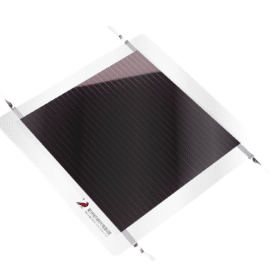
A team of researchers from China and the United States has summarized the commercialization status of several manufacturers, including Saule Technologies, Solaronix, Panasonic, Toshiba, Utmolight, Wonder Solar, Kunshan GCL, and Microquanta.

Saudi Arabia reveals bidders for 3.7 GW solar tender
Saudi Power Procurement Co. (SPPC) has announced the selected bidders for the the fifth round of the Saudi Arabian government’s renewable energy tender program.
European consortium aims to deploy 150 MW of offshore PV in North Sea
Dutch offshore solar company Oceans of Energy is leading a project to scale up offshore solar blocks. Backed by 15 European partners, it is expected that the 150 MW building blocks will set a new standard in offshore energy and allow the construction of gigawatt-scale offshore solar farms.

AirTrunk, ib vogt sign virtual PPA for 29.9 MW of solar in Malaysia
Data center specialist AirTrunk has signed a virtual power purchase agreement (VPPA) under which it will procure energy from a 29.99 MW solar farm that ib vogt is now developing. Construction on the project is set to begin later this year.

Sekisui Chemical to open solar module factory in Slovakia
Denisa Sakova, Slovakia’s Deputy Prime Minister and Minster of Economy, has signed an agreement with Japanese plastics manufacturer Sekisui Chemical, which is developing flexible photovoltaic panels. Sakova says the aim is to explore the possibility of producing the panels in Slovakia.
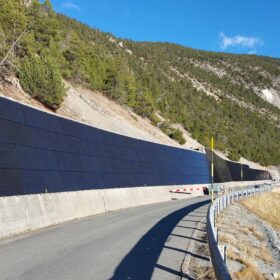
Engadiner Kraftwerke energizes second PV plant on Swiss retaining wall project
Swiss hydropower company Engadiner Kraftwerke said the new PV system went into service in the Swiss Canton of Graubunden to generate 230,000 kWh per annum. The array utilizes solar modules provided by Lithuanian manufacturer Solitek.
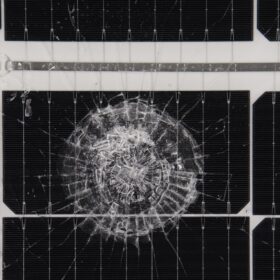
Monocrystalline solar modules more resistant to hail than polycrystalline panels
Scientists from Pakistan, Qatar and Saudi Arabia have conceived a new experimental setup to conduct hail impact tests for photovoltaic modules. The first tests showed that monocrystalline panels lose less efficiency than their polycrystalline counterparts with the same number of busbars.
