
Sandia Labs benchmarks PV software providers in first ever blind comparison analysis
Sandia National Laboratories conducted the first-ever blind comparison of seven commercial PV modeling software, revealing that differences in weather handling, system modeling, derates, and assumptions grow as system complexity increases. The study emphasizes that software choice should consider project complexity, workflow, and modeling features rather than relying on rankings alone.
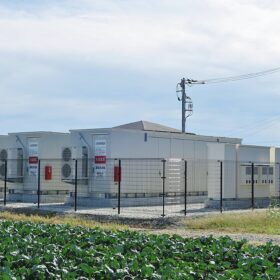
Panasonic claims world’s first trial of cybersecurity monitoring for grid-scale BESS
A Japanese joint-pilot will test grid-scale BESS with a range of local and remote attack vectors, with cybersecurity monitoring to watch for indications of anomalies.
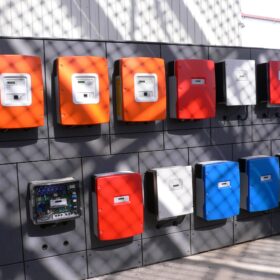
New PV inverter efficiency metric reflects local solar conditions
Researchers in Brazil have developed a weighted PV inverter efficiency methodology that accounts for country-specific solar irradiance and operating conditions. The approach is designed to address the limitations of international metrics by incorporating variables such as input voltage and maximum power point tracking (MPPT) performance.

What happens when malware hits PV systems
A random malware variant affected about 800 remote monitoring devices at ground-mounted PV plants in Japan in May 2024. Tokyo-based cybersecurity firm Girasol Energy has told pv magazine what happened and how PV asset owners can protect themselves against such incidents.
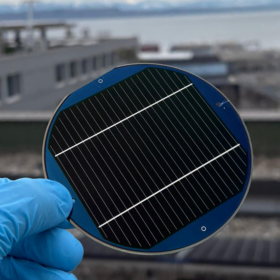
EPFL, CSEM achieve world record efficiency of 30.02% in perovskite-silicon triple-junction solar cell
An international research team boosted triple-junction solar cell performance by enhancing perovskite crystal growth, increasing middle-cell light absorption, and adding reflective nanoparticles.
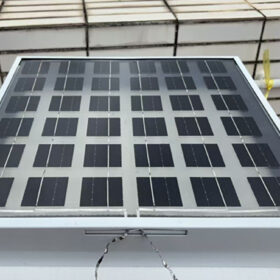
Thermochromic bifacial PV glazing system for reducing building cooling loads
Researchers in Hong Kong Hong Kong fabricated a thermochromic bifacial photovoltaic glazing system prototype that passively regulates solar heat gain while harvesting energy from both sides. Experiments and simulations showed it significantly reduces cooling loads and indoor temperatures while boosting electricity generation.
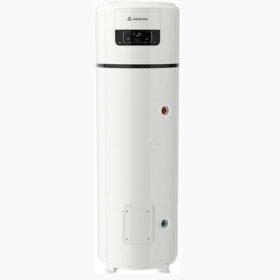
Ariston launches residential propane heat pump with built-in PV function
The Italian heating solutions provider said its new Nuos Plus S2 Wi-Fi heat pump system offers up to 80% energy savings and a coefficient of performance of up to 3.51.
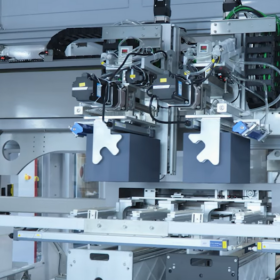
India’s PV module manufacturing capacity tops 210 GW
India added 119 GW of solar module capacity and over 9 GW of cell capacity in 2025, bringing total capacities to about 210 GW and 27 GW, respectively, according to Mercom India. Growth was driven by strong project demand and policy support, although supply-demand alignment is expected later in 2026 as domestic cell production ramps up.

China’s new five-year plan deepens shift toward focus on renewables system
China’s 2026 to 2030 policy plan elevates clean electricity as a central driver of economic growth, with greater emphasis on system integration and industrial use.

Survey reveals PV systems in Germany outperform lifespan expectations
Researchers analyzed 16 years of data from over 1 million PV systems in Germany and found annual degradation is just 0.52–0.61%, roughly half prior estimates. Environmental factors like heat, frost, and air pollution affect performance, while smaller systems degrade less than larger ones, boosting long-term reliability and profitability.
