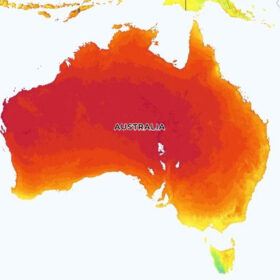
Australia paving way for global solar energy adoption
All of the leading countries for per capita solar and wind generation are in Europe except for Australia, which is generating more solar electricity per capita than any other country. Per capita, it is also a leading producer of wind energy.
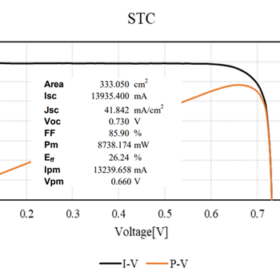
Das Solar claims record open-circuit voltage of 730 mV for n-type solar cell
Das Solar has achieved a world-record open-circuit voltage of 730 mV for an M10 n-type tunnel oxide passivated contact (TOPCon) solar cell, with a power conversion efficiency of 26.24%, according to the Chinese Academy of Sciences Institute of Electrical Engineering.

Belgium’s Flanders region launches new call for solar rebates
The Flemish authorities have allocated a budget of €3 million ($3.3 million) for the first round of its solar rebate scheme. The call is open to homeowners, businesses, public organizations, and energy communities.
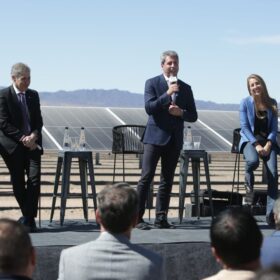
Oil company commissions 100 MW solar plant in Argentina
YPF Luz has switched on a 100 MW solar facility in the province of San Juan, Argentina. It says the array is the first phase of a bigger 300 MW solar project.
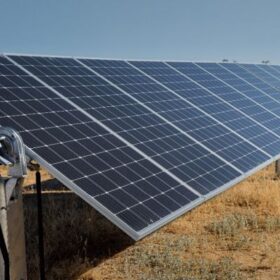
ACEN issues works packages for 400 MW solar project in Australia
Construction of the 400 MW Stubbo Solar Farm in New South Wales, Australia, is scheduled to start in May. Developer ACEN Australia is launching the tender process for a suite of works packages associated with the AUD 800 million ($536 million) PV project.
Ascent Solar acquires Swiss thin-film solar module maker Flisom
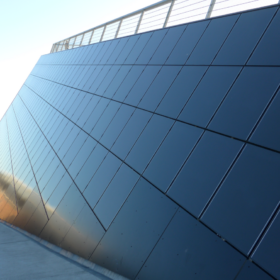
Ascent Solar says its acquisition of Flisom will triple its production capacity.
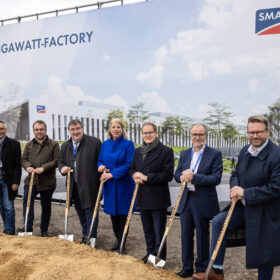
SMA Solar begins work on 20 GW inverter factory in Germany
SMA says its total inverter capacity will double to 40 GW once its new factory is fully operational in Niestetal, Germany.

Israel introduces storage-linked tariff for distributed PV
The Electricity Authority of Israel has decided to regulate the connection of energy storage systems to low-voltage PV plants with capacities of up to 630 kW. It is introducing a supplementary tariff for PV and storage facilities that share single metered connection points to the grid, in order to reduce bottlenecks on the grid.
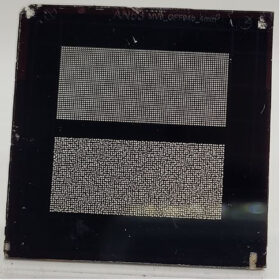
Translucent tandem perovskite-perovskite solar cells for BIPV
An international research group has made translucent perovskite solar cells to maintain decent levels of average visible transmittance (AVT) while offering higher efficiency. They tested different module and cell configurations and produced a two-terminal, perovskite-perovskite tandem device with an efficiency of 17.7% at 12% AVT.
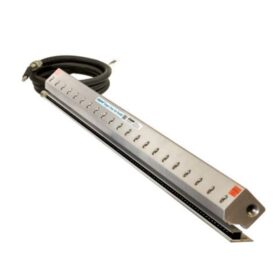
Dust removal for solar panels via electrostatic cleaning
A Jordanian research team has designed a cleaning technique for solar modules that uses static electricity to remove dust from panel surfaces. The system features an electrostatic ionizer that reduces attraction between dust particles and their accumulation on modules, improving their energy yield.
