
German startup launches gateway to block inverter kill switches
German startup Solarsecure Tech has introduced a gateway designed to decouple PV inverters from manufacturer clouds and block unauthorized remote control commands.

SolarPower Europe issues due diligence guide for PV-BESS
SolarPower Europe has released new technical due diligence guidelines for utility-scale solar-plus-storage projects, covering risk, engineering and lifecycle standards for co-located PV and battery systems.
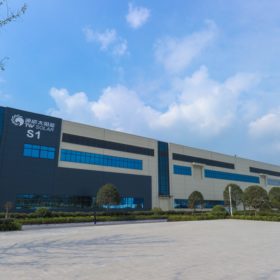
Tongwei plans to acquire polysilicon competitor Qinghai Lihao
Shanghai-listed polysilicon producer Tongwei says it intends to acquire 100% of Qinghai Lihao through a share-and-cash transaction, as consolidation in China’s polysilicon sector increasingly shifts toward mergers and acquisitions.

Fraunhofer IEE calls for ‘grid-forming readiness’ in distribution networks
Germany’s Fraunhofer Institute for Energy Economics and Energy System Technology IEE (Fraunhofer IEE) says in a new position paper that large-scale battery storage systems in medium-voltage grids should be technically prepared for future grid-forming operation, aiming to bridge the gap between current regulations and potential system stability requirements.

Standardizing smart energy requirements
A systems approach is essential for smart energy standardization, ensuring interoperability, avoiding overlaps, and addressing complex interactions across the grid, appliances, and infrastructures. The IEC System Committee for Smart Energy (SyC SE) applies system-level thinking, using tools like reference architectures and roadmaps to coordinate standards, support innovation, and tackle emerging areas such as EV integration, digital twins, and zero-emission technologies.
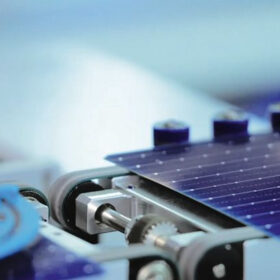
JinkoSolar achieves record-breaking 26.66% efficiency for TOPCon solar cell based on M10-size wafer
The Chinese manufacturer claims the new efficiency result sets a world record for industrial-scale TOPCon solar cells on M10-size wafers. The achievement was verified by an undisclosed independent third-party organization in China.
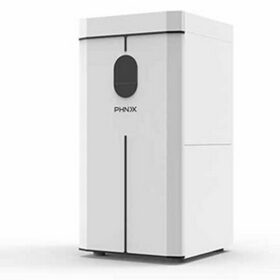
Phnix unveils indoor monobloc heat pump for space‑constrained urban retrofits
The Chinese manufacturer said its new airMono indoor monoblock heat pump is tailored for space‑limited urban retrofits, providing heating, cooling, and domestic hot water without an outdoor unit. The system’s coefficient of performance ranges from 2.5 to 4.1, while the seasonal coefficient of performance spans 4.5 to 4.7.
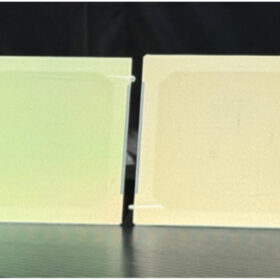
Japanese scientists build near-white heterojunction solar cell for BIPV applications
The lab-scale, near-white heterojunction solar cell uses nanoclay-based scattering layers combined with dielectric multilayer films to preserve power conversion efficiency while enhancing visual appeal. The researchers report optical losses of less than 1% at a 50% clay volume fraction, which are significantly lower than those observed with textured glass.

Solar electricity during night-time
Night-time in solar PV systems averages 16 hours, requiring significant storage or alternative generation to meet demand. Pumped hydro and batteries are key, with pumped hydro offering long-duration, low-cost storage for cloudy or windless periods. Complementary strategies include wind power, load shifting, and dispatchable generation, while high solar and wind penetration reshapes grid operations and pricing.

U.S government sets preliminary countervailing duties on solar imports from India, Indonesia and Laos
The U.S. Department of Commerce has issued preliminary findings that solar manufacturers in India, Indonesia and Laos benefited from government subsidies, paving the way for countervailing duties of up to 143.30%.
