
Is large scale solar ready for the North Pole?
Norwegian researchers have conducted a study to assess the technical feasibility of solar parks in polar regions. They found out that snowdrifts may be a major issue but they also believe that snow accumulation can be reduced through snow fences and proper system design.

US Congress urges Border Patrol action on forced labor allegations
Members of the U.S. Congress have called on the Customs and Border Protection commissioner, Troy Miller, to take immediate action regarding polysilicon products entering the United States from Xinjiang, China.
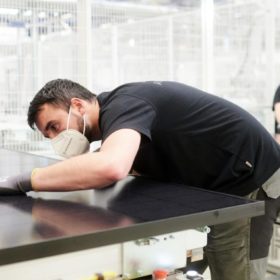
Meyer Burger wants to build another 400 MW factory
The Swiss manufacturer has secured €185 million for the expansion of its cell and module production. Meyer Burger no longer wants to sell its solar cells to third parties in the future.

Deploying solar on bridges
A bridge crossing the Pò river in San Mauro Torinese, in northern Italy, is set to host a 300m long PV system designed to rely on special mounting structures and full-black modules. The local administration said the bridge was chosen as the rooftops and surfaces available are all located in landscape protection areas adjacent to the town’s most important historic building.
Swedish fund launches takeover bid for Solarpack
Swedish venture capital fund EQT has launched an offer for the Spanish solar developer at €26.50 per share.
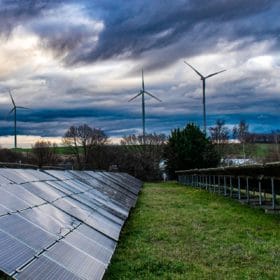
Module price increases to moderate PV project returns in India
PV module prices have risen by 15% to 20% over the last four to five months. PV modules account for about 50% to 55% of overall project costs, so such price increases could moderate debt service coverage metrics for developers.
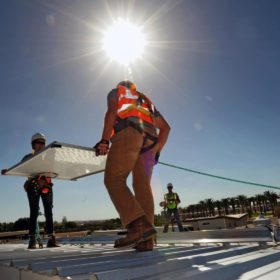
US passes 100 GW of installed solar capacity
Figures from the US Solar Energy Industries Association (SEIA) show that utility-scale solar set an installation record in the first quarter, with 3.6 GW of new capacity additions. Texas made up the largest share of this capacity, with more than 1.4 GW.
Chinese PV Industry Brief: New incentives for rooftop PV, TBEA increases stake in Xinte
China’s National Development and Reform Commission (NDRC) has allocated RMB500 million (US$78.1 million) for the incentive scheme for residential PV in 2021. Chinese electronic engineer TBEA is set to raise its controlling stake in polysilicon manufacturer Xinte Energy as it attempts to fund a planned 100,000-tons-per-year fab in Inner Mongolia.

French government finances 150 MW solar project in Tanzania with €130m
The solar facility is intended at reducing the country’s dependency on hydropower, especially during drought periods.

Taiwan maintains feed-in tariffs for PV unchanged
The move is intended at helping the solar sector recover from the delays caused by the Covid-19 crisis. The Taiwanese government has also granted a three-month grace period for project completion.
