
‘Bigger is not always better’
Chinese monocrystalline PV module manufacturer Longi has yet to join the race to produce solar panels with power outputs above 600 W. The decision is line with a clear strategy, a company spokesperson told pv magazine. Outstanding issues for these moduels, according to the manufacturer, include low cell manufacturing yield, system compatibility, concerns about module transport, and hotspot-related failure risks, as well as the need for mechanical loading tests.
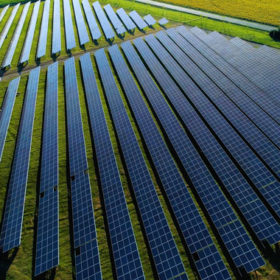
France installed 379 MW of PV in H1
France’s cumulative PV capacity reached 10.3 GW at the end of June. Solar generated 6.7 TWh of electricity in the first half of 2020, compared to 5.9 TWh during the same period in 2019, representing 3.0% of French electricity consumption.
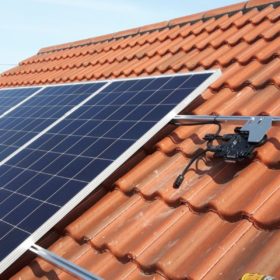
Enphase inverters added to Ikea’s turnkey solar offer in Australia
The California-based energy technology company has announced that its microinverters have been selected for Solargain’s turnkey solar offerings in Australia, including the retailer’s offer in collaboration with the Swedish furniture giant.
Indian state of Gujarat launches 110 MW PV tender
Gujarat State Electricity Corporation Limited (GSECL) has invited bids to set up an aggregate 110 MW of grid-connected solar power plants at several substations operated by Gujarat Energy Transmission Corporation Limited. Bidding closes on September 16.

Centrotec becomes largest shareholder of Sonnenstromfabrik
Centrotec, a German energy efficiency specialist, has acquired Switzerland’s Pari Group, which holds an 80% stake in German PV module manufacturer Sonnenstromfabrik.
Portuguese government confirms world record solar price of $0.01316/kWh
The Portuguese government has revealed some of the preliminary results of the national solar auction which closed on Tuesday. Antonio Delgado Rigal, chief executive of energy forecasting service Aleasoft, said that the 15-year contracts awarded in the auction were the key to understanding the reason of such a low price. This, combined with the rights for land and grid connection guaranteed by the auction, makes attractive bidding at low prices.
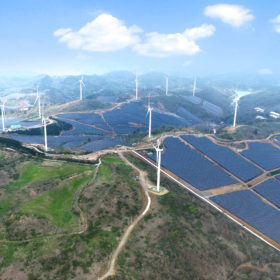
South Korea’s largest hybrid solar-wind project
A 133 MW hybrid solar-wind power plant linked to 242 MWh of storage is currently being built in a mountainous area in South Korea. Chinese manufacturer JA Solar has provided the modules for the PV section.
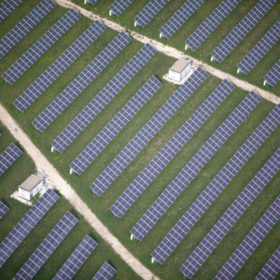
New solar PPA, hybrid PV-wind project in Germany
Statkraft and Naturstrom AG have signed a power purchase agreement for a 50 MW solar array in Bavaria, while BayWa r.e. has announced a new solar-wind hybrid project, with 22 MW of solar capacity.
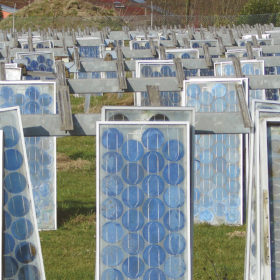
Recycling PV panels: Why can’t we hit 100%?
In February, non-profit EU solar panel recycling body PV Cycle announced it had collected 5,000 tons of modules in France, of which 94.7% could be recycled. A reader asked us about the remaining 5.3% and here, PV Cycle’s communications manager, Bertrand Lempkowicz, responds.

Hanwha Q Cells was biggest winner in Portuguese solar auction
The South Korean solar panel maker secured around 300 MW of the 700 MW awarded in the procurement round. The other winners are reportedly Spanish power company Iberdrola, Italian peer Enel and French-owned developer Tag Energy.
