Australian scientists claim breakthrough in perovskite stability
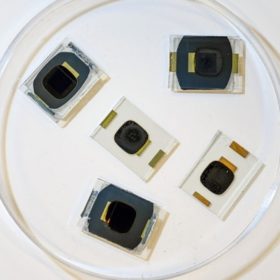
In a world-first, perovskite solar cells developed by Australian scientists have passed a series of heat and humidity tests using a low-cost solution to overcome some of the challenges that are hindering the technology’s commercialization. The scientists did this by suppressing the decomposition of the perovskite cells using a simple, low-cost polymer-glass blanket.
Chinese PV Industry Brief: Jinko Power and Trina Solar go public, profit growth for Daqo, and new dates for SNEC
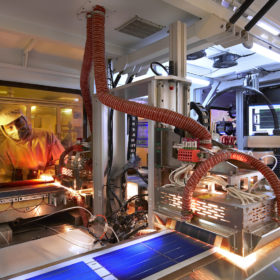
Jinko Power has moved forward with plans to list shares on the Shanghai Stock Exchange, while Trina Solar said that the China Securities Regulatory Commission has approved its application for its own initial public offering. Polysilicon producer Daqo, meanwhile, reported solid first-quarter results, and the organizer of the SNEC solar show changed the exhibition’s dates and location once again.
Borehole thermal energy storage for solar
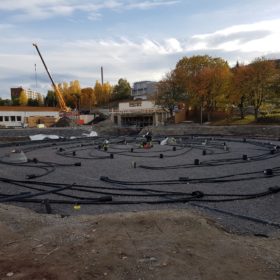
The municipality of Drammen, Norway, has started testing a seasonal PV storage project that uses boreholes in the ground. The operators of the project are using electricity from PV modules to produce heat via a CO2 heat pump and outdoor air. The heat is produced by the CO2 pump during the spring, summer and fall, in addition to heat produced by solar thermal collectors.
Croatia introduces provisions to tender 1 GW of solar
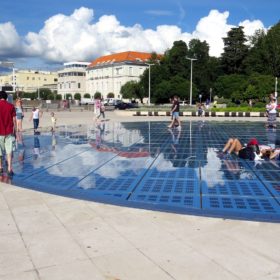
The authorities plan to assign 2.26 GW of renewable energy capacity overall under the scheme, which will include other energy sources such as hydropower, wind, biomass, biogas, and geothermal energy. The government will provide projects it selects with a feed-in price premium, which will be paid for the power generated by the projects, on top of spot market prices.
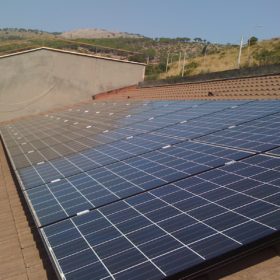
Italian homeowners can now install PV systems for free
The Italian government has raised the tax breaks it offers for building renovations and energy-requalification projects – potentially including storage-backed rooftop PV systems – to 110%. The new measure is part of the Relaunch Decree, which is a package of guidelines aimed at reviving the Italian economy in response to the Covid-19 crisis.

First defeat for Mexican government in its fight against renewables
Twenty-three renewable-energy operators have resumed testing of their installations, just a few weeks after the Mexican government halted grid connections for new solar and wind power projects, pending further notice. Mexicio’s National Energy Control Center (Cenace) has faced a series of “amparo” lawsuits since the government introduced the new measures against renewables.
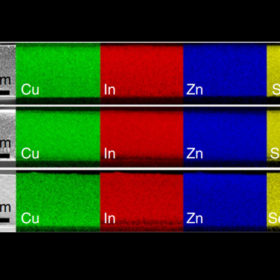
Lead-free quantum dot solar cells with 10% efficiency
Scientists in the United States have created a quantum dot solar cell which has a photon-to-electron conversion efficiency of 85%. The device is also said to exhibit remarkable defect tolerance and toxic-element-free composition.
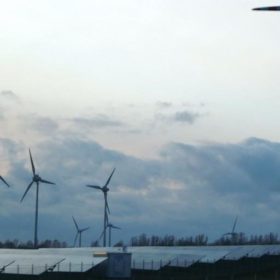
Solar sweeps the board again in German renewables auction
Not one wind power project was submitted to the German network authority for the April round of a national clean energy procurement program. Almost 204 MW of solar generation capacity was allocated across 30 solar projects with an average final electricity price of €0.053/kWh.
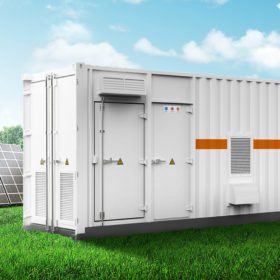
Chinese 202 MW/MWh solar-plus-storage project
Inverter maker Sungrow is supplying the inverters and storage system for China’s largest, 202.8 MW/MWh solar-plus-storage facility. The plant will be connected to a new, 800 kV ultra-high voltage power line.

New 400 MW solar module factory for Germany
Production is set to start in the first quarter of next year at the planned fab in Greiz, Thuringia. The facility will manufacture 370 W panels featuring half cells, large wafers and nine busbars.
