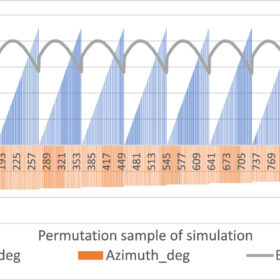
The optimal fixed tilt, azimuth angles for bifacial PV in Saudi Arabia
A new bifacial PV optimization model for 18 Saudi Arabian cities identifies optimal tilt and azimuth, showing rear-side irradiance can boost annual energy yield by 8–12 % and shifts tilt 3°–11° higher than monofacial modules. The framework validates previous studies, highlights high- and low-performing locations, and serves as an early-stage planning tool before detailed project simulations.

Data center survey reveals majority believe renewables and BESS are the ideal energy mix, power issues start in 2027
54% of respondents cited “energy availability and redundancy” as the single greatest obstacle to successful data center development between now and 2030.

Brazil curtails 20% of solar and wind output in 2025, with losses at $1.2 billion
Brazil curtailed about one-fifth of its solar and wind generation in 2025, wasting an estimated BRL 6.5 billion ($1.23 billion), as grid constraints and demand mismatches pushed the power system close to operational safety limits on 16 days, according to a report from Volt Robotics.

The impact of microclimate effects on floating PV plants
French researchers have developed a high-resolution computational framework to model microclimate effects of large floating solar PV systems, enabling accurate predictions of heat transfer, ambient temperatures, and water evaporation based on panel configuration and wind conditions. The model can inform thermal performance, environmental impacts, and optimize designs for utility-scale floating PV, as well as ground-mounted and agrivoltaic installations.

Solar-plus-storage for data centers: not a simple switch
Renewables and storage could reliably power data centers, but success requires active grids, coordinated planning, and the right mix of technologies. Hitachi Energy CTO, Gerhard Salge, tells pv magazine that holistic approaches ensure technical feasibility, economic viability, and energy system resilience.
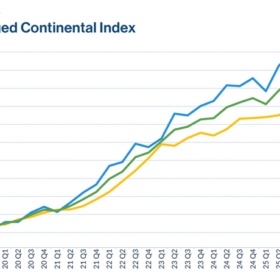
Uncertainty looms as U.S. solar PPA prices climb for second straight quarter
A report from LevelTen Energy finds solar PPA prices in North America rose 3.2% in Q4 2025, marking a nearly 9% year-over-year increase as developers and buyers navigate a complex “post-OBBBA” regulatory environment.

Cubenergy releases energy storage block for utility, C&I applications
Cubenergy has launched FlexCombo 2.0, a scalable battery energy storage system for utility, commercial, and industrial applications, offering up to 16 MWh capacity with LFP batteries. Its modular design, advanced BMS, and cloud-based operations enable easy installation, seamless expansion, and efficient grid integration, according to the manufacturer.

Early tropical storm cuts solar in Philippines, while East Asia sees La Niña gains
In a new weekly update for pv magazine, Solcast, a DNV company, reports that in January most of East Asia experienced normal to above-average solar irradiance, with southeastern China seeing surges due to reduced clouds and low aerosol levels under lingering La Niña effects. In contrast, the Philippines faced below-average irradiance from early Tropical Storm Nokaen, while other regional cities like Seoul, Tokyo, and Taipei recorded modest gains.
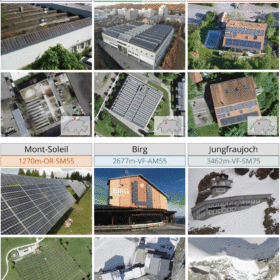
Study finds much lower-than-expected degradation in 1980s and 1990s solar modules
Researchers at SUPSI found that six Swiss PV systems installed in the late 1980s and early 1990s show exceptionally low degradation rates of just 0.16% to 0.24% per year after more than 30 years of operation. The study shows that thermal stress, ventilation, and material design play a greater role in long-term module reliability than altitude or irradiance alone.
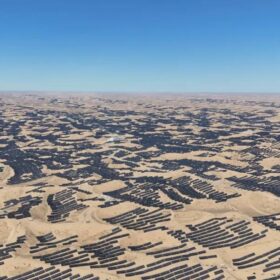
China adds 315 GW of solar in 2025
China installed a record 315 GW (AC) of new solar capacity in 2025, lifting cumulative installed PV capacity to 1.2 TW and pushing non-fossil power sources past thermal generation for the first time.
