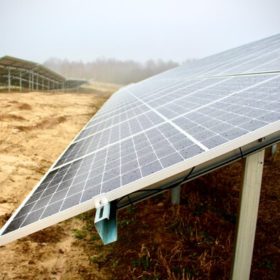
Unsubsidized solar projects proliferate in Poland
Four new PV developments have been announced this week, adding to a growing list of renewable energy projects in the coal-dependent Eastern European country.
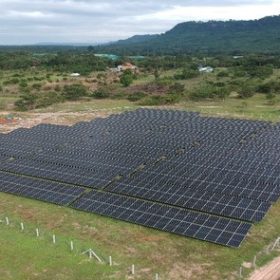
Solar-plus-storage for mineral water producer in Cambodia
The system delivered by French energy giant TotalEnergies will power Kulara Water’s bottling facility in Siem Reap Province.

Turkey added 1.14 GW of PV capacity in 2021
According to official statistics from grid operator TEIAS, the country’s cumulative PV capacity reached 7.81 GW at the end of December.
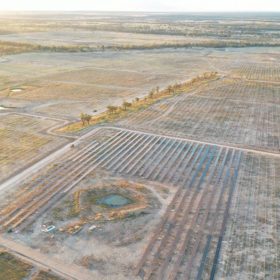
X-Elio reaches financial close on 200 MW solar farm in Australia
Spanish renewables developer X-Elio expects its 200 MW Blue Grass Solar Farm to achieve full commercial operations early this year after it reaches financial close for the project in Australia.

Norway deployed 65MW of solar in 2021
The provisional figure took the nation to a cumulative 215MW at the end of the year, according to new statistics provided by Norwegian solar industry organization the Solenergiklyngen.

Vertical agrivoltaic project takes shape in France
The 100kW pilot vertical PV plant is being developed by French energy giant Engie. It will be used to test the effects of agrivoltaics on the microclimate, soil and vegetation.
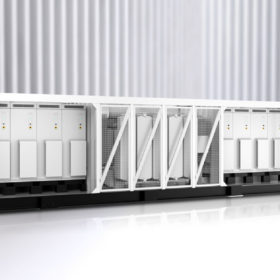
Sungrow presents new central inverter
Called the 1+X modular inverter, the new product can be deployed, by combining eight units, to reach a power of 8.8MW. It also features a DC/ESS interface for the connection of storage energy systems.
Pulling fertilizer out of thin air with PV
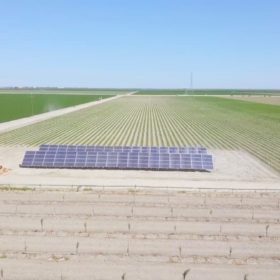
Nitricity has developed an experimental plasma reactor that uses PV electricity to produce competitively priced, environmentally clean, nitrogen fertilizer. Its onsite fertilizer production eliminates emissions from transport, and provides a viable alternative to fossil-based nitrogen fixation methods like the Haber-Bosch process.
Indian power company invites bids to build 900MW of solar parks in Cuba
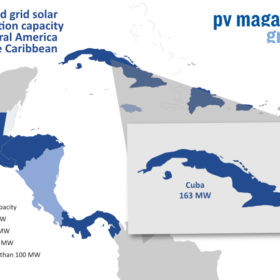
State-owned utility NTPC, a partner of the International Solar Alliance, will help the Cuban government with developer selection and the signing of project agreements and will oversee solar plant implementation up to commissioning.
Shell acquires PV project pipeline in Italy
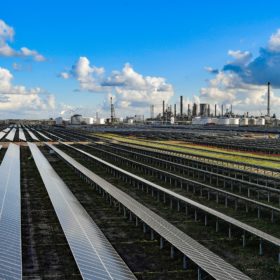
The energy giant acquired solar-konzept Italia Srl, which has a portfolio of solar projects at different stages of approval and development. The solar parks are planned to sell electricity to commercial and industrial customers.
