
Côte d’Ivoire gets World Bank support for 60 MW of solar
The African country has joined the World Bank’s Scaling Solar Program. Two PV plants will be located in Touba and Laboa, in the northeast of the country.
Hanwha vows ‘immediate appeal‘ in event of ITC summary decision
With the Q Cells solar business warning it is preparing an instant appeal if a U.S. ITC judge rules against it Stateside, the chemical company parent announced its solar panel business saw a year-on-year, third quarter rise in revenue from KRW818 billion to KRW1,638 billion.
California spies solar-plus-storage domination by 2030, with 11 GW/44 GWh of batteries
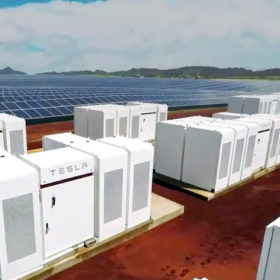
The state’s 2019 Integrated Resource Plan foresees just over 11 GW of solar power generation capacity and at least 11 GW – with a possibility of up to 19 GW – of energy storage necessary to meet resource adequacy as part of the state’s legally required 60% renewable portfolio standard by 2030. Prices have halved since 2017.
Daqo pushes poly production cost below $7/kg
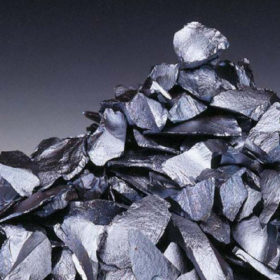
Chinese polysilicon giant Daqo New Energy posted $83.9 million in revenue in the third quarter for gross profit of $18.1 million. The company has an additional 35,000-ton production facility set to come online this year.

Spain’s ACS group may sell renewable energy unit
A source close to the company has told pv magazine although there are investment funds and utilities interested in buying the renewables business, an IPO for the entity has not been excluded.
DMEGC launches half cut monocrystalline module with 440 W output
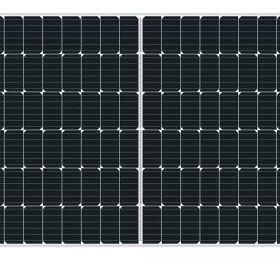
The new 24.5kg, PERC monocrystalline product from DMEGC is said to have an efficiency of 19.78%. The panels are available in glass and white-backsheet formats.
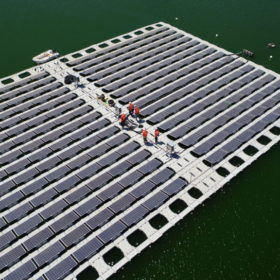
EU to help anchor lower price for floating solar power
The Fresher project, funded by the EU’s European Maritime and Fishery Fund, aims to develop better and cheaper mooring and anchoring systems for floating solar. The initiative is backed by Portugal utility EDP, which has recently begun to install floating projects.

Angola’s solar plans boosted by Italian oil giant Eni
The Italian oil and gas provider has signed a concession agreement with the government of the African oil country to build a 50 MW solar plant. The project is expected to be in the province of Namibe and will be part of the nation’s plan to deploy 600 MW of solar by 2022.

Three steps to fast-charging potassium batteries
Scientists led by Moscow’s Skolkovo Institute of Technology have drawn upon several of their recent battery material innovations to create a potassium-ion device. The institute says its development will pave the way for ultrafast and durable, high capacity metal-ion batteries, to supply rising demand for energy storage innovations.
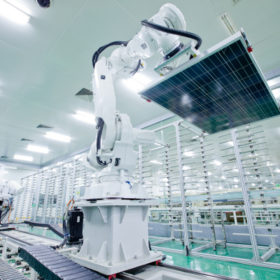
Jinko expects US authorities to reject Hanwha Q Cells patent infringement allegations
Korean PV manufacturer Hanwha has accused competitors in the U.S., Germany and Australia of having infringed its patents. In America, Jinko Solar – as well REC and Longi Solar – applied for an interim review of a patent at the International Trade Commission. Now, Jinko says it expects the judges to rule in its favor.
