
Germany installed 420MW of PV in January
The cumulative capacity of all PV systems in Germany reached 56.7 GW at the end of January.
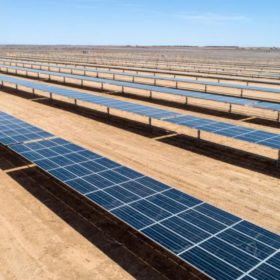
Work begins on 1.2GW renewable energy hub in Australia
Iron ore magnate Andrew Forrest has announced a AUD 3 billion ($2.2 billion) investment in a 1.2GW hybrid wind, solar and battery energy storage project in Queensland, Australia.
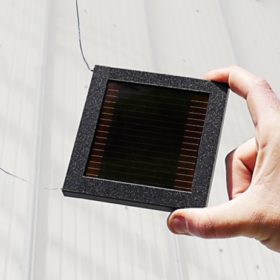
Mini perovskite solar module with 40 sq cm aperture area, 17% efficiency
The 19.2%-efficient perovskite cells used in the module rely on an electron layer based on tin oxide that was deposited via chemical bath deposition. This technique, according to the device’s creators, has made it possible to have a relatively small drop in efficiency from small cells to the 40cm2 module.
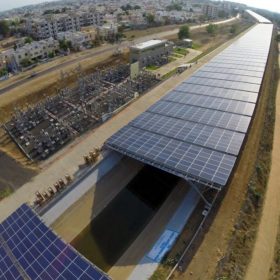
Indian state mulling MW-scale canal-top solar
The Jharkhand Renewable Energy Development Agency (JREDA) has launched bidding for megawatt-scale, canal-top solar projects at three sites in the Indian state of Jharkhand.

First attempt to build tandem perovskite-PERC/POLO solar cells achieves 21.3% efficiency
The tandem cell was fabricated by German scientists through a process flow that is compatible with industrial, mainstream PERC technologies. According to its creators, the device has the potential to exceed efficiencies of over 29% with adjustments in the perovskite thickness and bandgap.

Chinese PV Industry Brief: Shangji Automation expands polysilicon capacity by 100,000 MT
In other news, Longi announced it further raised wafer prices and the China Photovoltaic Industry Association (CPIA) said the Chinese PV market may reach a size of up to 90 GW in 2022.

Sustainable, vertically integrated solar manufacturing in India
A new report by JMK Research and IEEFA says that Indian solar manufacturers need to create a strong foundation for sustainable development by integrating raw materials into their R&D plans, rather than focusing solely on output.
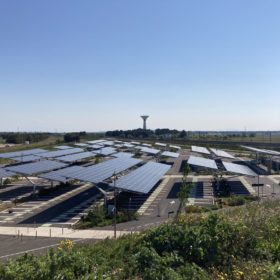
French rail operator launches tender for 156 PV carports
French state-owned railway operator SNCF plans to install 1.1 million square meters of solar modules at its train stations by 2030. Developers interested in its new solar carport tender have until April 15 to submit their project proposals.

Bifacial TOPCon solar cell with 23.84% efficiency, 90% lower silver consumption
Developed by Germany’s Fraunhofer ISE, the cell is manufactured with metallization based on a plating process. The device was built with galvanic nickel/copper/silver contacts instead of common silver contacts.

New flexible solar module factory begins operations in the UK
Operated by UK start-up Power Roll, the pilot factory will reach a capacity of 30 MW by year end. The manufacturer uses low-cost roll-to-roll manufacturing processes and patented microgroove patterns to produce flexible solar panels intended for applications on warehouses and agricultural sheds whose roofs are not strong enough for conventional arrays as well as in vehicle-integrated photovoltaics.
