
Italy-Austria interconnector starts operating
A 28-kilometer underground power cable owned by Italian grid operator Terna started work on Friday, the company announced. The interconnector connects substations in Glorenza northern Italy and Nauders eastern Austria.
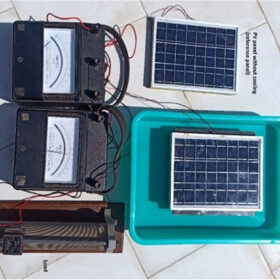
Passive solar module cooling tech based on PCM, heat sink fins, water
A global research group has designed a novel PV module cooling system based on multiple cooling sources. The proposed system was able to reduce a PV system temperature by up to 16.7 C and increase power output by over 9%.
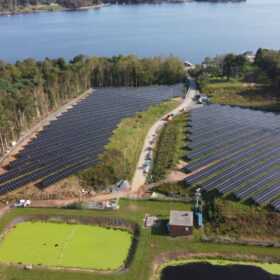
Nova Scotia completes province’s largest utility-scale solar facility
Combined production from the Mahone Bay and Berwick solar power plants are moving the Canadian province of Nova Scotia closer to its climate plan goals.
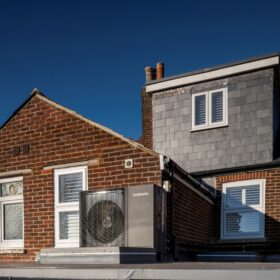
Heat pump sales declining in Europe
European heat pumps sales were strong in the first quarter of 2023, but this was short-lived as sales figures slid by 14% in the third quarter – a worrying reflection of 2022 figures and what could come, warns the European Heat Pump Association (EHPA).

SolarPower Europe praises EU reforms despite capacity remuneration ‘regret’
A new provisional agreement to reform the European Union’s electricity market design is a “clear path forward for long-term investments into renewables,” says SolarPower Europe. However, the organization has criticized the deal’s capacity remuneration mechanisms for “prolonging Europe’s dependency on coal.”

Bolivian wildfires, El Niño impact South American PV irradiance
In a new weekly update for pv magazine, Solcast, a DNV company, says that irradiance patterns across South America last month were impacted by moisture from El Niño, high pressure and the Andes – but smoke from Bolivian wildfires presented an “anomaly.”
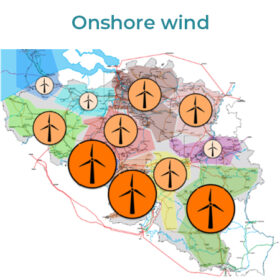
Belgian grid operator publishes grid capacity map
Belgian network operator Elia says its new grid map shows available capacity, in addition to existing and already reserved capacity. The map, which considers growth in residential load and generation, shows that there might still be enough free capacity for 3.3 GW of solar and 2.8 GW of storage.
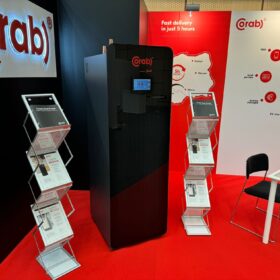
Corab debuts residential brine-water heat pump
Polish manufacturer Corab has developed a new ground-source heat pump with several components supplied by Denmark’s Danfoss. It offers 8 kW to 16 kW of rated thermal power.
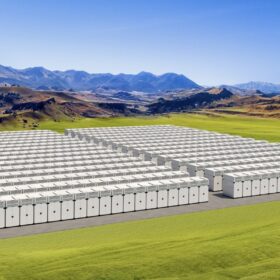
US energy storage deployment surges in Q3
Wood Mackenzie says that grid-scale energy storage deployment rose by 37% on a quarterly basis in the third quarter.

South Africa launches tender for 1.8 GW of solar
South Africa’s new auction is the first to be held under a December 2022 government plan to procure 14,771 MW of new generating capacity.
