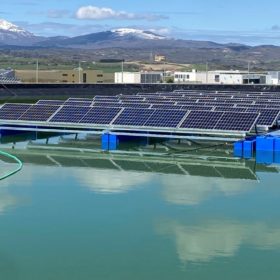
Trimaran-shaped floating PV system design from Spain
The proposed system architecture is claimed to offer more stability compared to conventional floating structures and reduces by up to 93% the contact area of the system with the water. The first system prototype was recently developed on a water reservoir in Alava, in the northeastern territory of the Basque Country.

Croatia may host Europe’s largest solar park
A proposal to build a 950 MW solar facility has been submitted to the Croatian authorities by El Sun Energy d.o.o. The solar park is planned to be located in the county of Šibenik-Knin in southern Croatia.
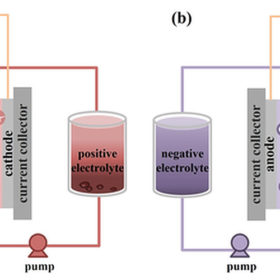
Bromine-based flow batteries for renewables storage
Bromine-based flow batteries have the potential for high energy density in renewable energy storage. Their commercial adoption, however, remains challenging due to the cathode materials used for their construction. New research from China seeks to shed light on how to overcome these hurdles.

Battery fire at Salt River Project in the US
Fire crews in Chandler, Arizona, sent robots into a building at the Salt River Project where a 10 MW battery was smoldering.
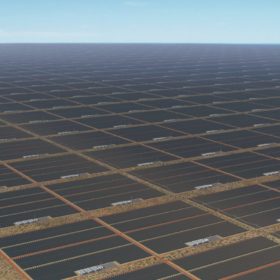
Sun Cable reveals full extent of its giant solar-plus-storage project in Australia
Singapore-based Sun Cable has submitted its Environmental Impact Statement to the Northern Territory Environment Protection Authority. The document reveals the full extent of the project’s enormity, specifically a 17-20 GW solar farm tied to 36-42 GWh of battery energy storage, which is set to be transmitted by subsea cables to Singapore.
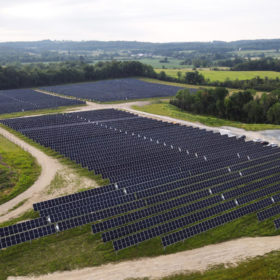
Utility scale solar inverters need improved commissioning and upkeep
Recurring power grid faults are testing solar inverter reactions, and have exposed issues that could seemingly be solved by improvements to commissioning, operations, and maintenance.
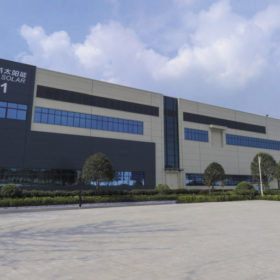
Chinese PV Industry Brief: Tongwei wants to reach 1 million MT polysilicon capacity by 2026
Tongwei also announced it wants to expand its solar cell capacity to 70 GW by the end of 2022 and 102 GW by the end of 2023.
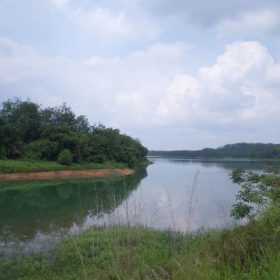
Malaysia’s water reservoir to host 150 MW floating solar plant
The floating facility will be built by Japan’s Shizen Energy and will sell power under unspecified conditions to local utility Syarikat Air Melaka Bhd (SAMB).
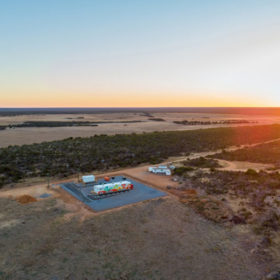
Australian town to be powered by pumped-hydro microgrid
The town of Walpole on Western Australia’s southernmost tip will soon be powered by a pumped-hydro microgrid, a first for the state which is already renowned for its rollout of microgrids and distributed renewable solutions.
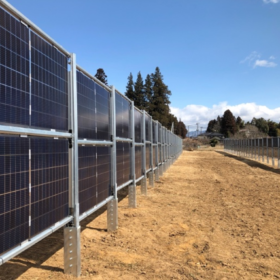
Japan’s first vertical agrivoltaic project
The facility was built with heterojunction modules and mounting systems provided by German companies Luxor Solar and Next2Sun, respectively. The distance between the panel rows ranges from 8 to 10 meters and the agricultural surface within the rows will be utilized by local livestock farmers as pasture.
