
China’s first salt cavern for compressed air energy storage goes online
Huaneng Group has finished building a 300 MWh storage project in Changzhou, in China’s Jiangsu province. The state-owned company has already started operating the facility, which is situated in a salt cavern.
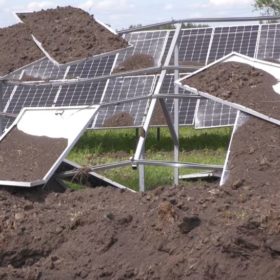
Missile strike destroys solar plant in Ukraine
Two Russian missiles have hit a ground-mounted solar plant near Kharkiv, Ukraine. According to the manager of the plant, the missile attacks produced holes at the site that measured 6 meters deep and 11 meters in diameter.
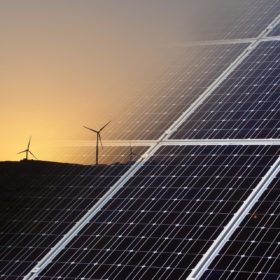
Solar-plus-storage vs. wind-plus-storage
US scientists have come up with an analytical way to evaluate the costs and net value of different configurations of large-scale wind and solar projects paired with battery storage. They identified six trends in the US electricity market and found that their framework is aligned with current commercial practices.
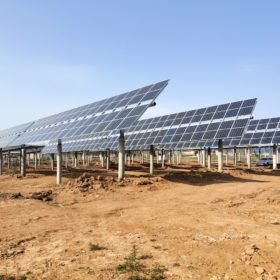
Trina Solar’s pathway to TOPCon
Trina Solar will eventually start selling TOPCon and heterojunction products, even though it built its first large-scale TOPCon project four years ago. The company says it is now making progress on TOPCon module production, despite supply chain issues.
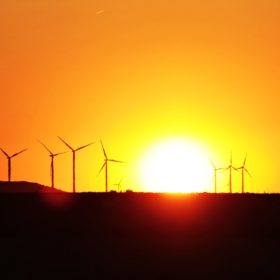
Adani Green switches on 390 MW wind-solar hybrid power plant in India
Adani Green’s new 390 MW wind-solar project will supply electricity under a 25-year power purchase agreement with Solar Energy Corp. of India (SECI), at a tariff of INR 2.69 ($0.035)/kWh.
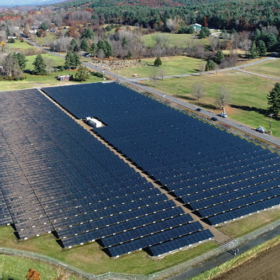
Borrego sells development business, including 8.4 GW solar pipeline
US-based Borrego said it will spin off and sell its development unit to ECP, along with its project pipeline of 8.4 GW solar and 6.4 GW/25 GWh of energy storage.
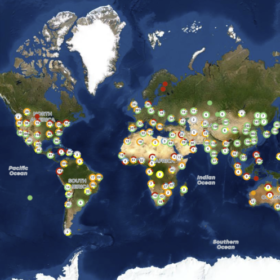
Global online database for solar parks above 20 MW
Global Energy Monitor (GEM) has launched a new open-source online tool that lists large-scale solar plants in 148 countries.
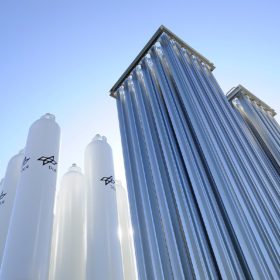
Australian developer pushes ahead with green hydrogen production plans
Frontier Energy has identified its preferred electrolysis technology as it advances plans to produce green hydrogen powered by the proposed 500 MW Bristol Springs Solar project in Western Australia.
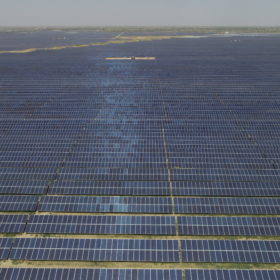
Indian developers switch on 300 MW of large-scale solar
Tata Power has commissioned a 100 MW solar project in the Indian state of Maharashtra, while Acme Solar has turned on a 200 MW PV facility in Rajasthan.
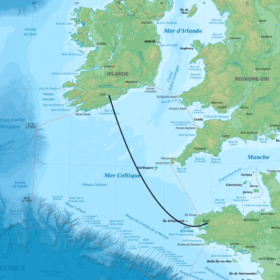
Irish authorities approve subsea power link to France
Ireland has given the green light to install a 700 MW, high-voltage direct current submarine power cable between its southern coast and the northwestern coast of France.
