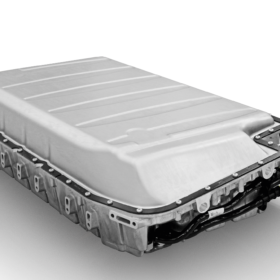
Italian solar park to be linked to 5MW/10MWh of second-life batteries
A unit of Enel plans to deploy 5MW/10MWh of second-life batteries at Rome-Fiumicino International Airport, where a 30MW solar park is now under development. The modular storage system will include different second-life lithium-ion batteries, mainly based on nickel, manganese and cobalt chemistry, with usable storage capacity ranging from 10kWh to 25kWh.

Azure Power commissions 300MW solar project in India
Azure Power has switched on a 300MW solar project in the Indian state of Rajasthan. It will supply electricity to Solar Energy Corp. of India for about $0.03/kWh over a period of 25 years.
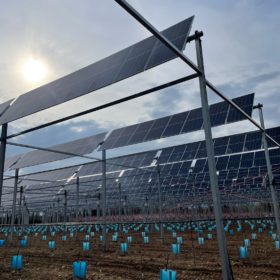
Agrivoltaics for stone fruits
French specialist Sun’Agri is developing a pilot project to combine solar power generation with the cultivation of peaches, apricots, and cherries.
Canadian Solar launches 420W rooftop solar module with 21.5% efficiency
The new product is part of the company’s HiKu6 series based on 182mm wafers. Its temperature coefficient is 0.34% and its electrical characteristics are claimed to be compatible with the most common photovoltaic inverters thanks to current values below 14A.
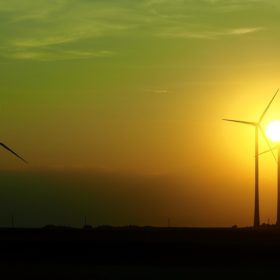
South African platinum mining company wants to deploy 75MW of hybrid wind-solar
South African platinum miner Sedibelo Platinum wants to deploy a 40MW hybrid wind-solar plant and a 35MW photovoltaic park to power its operations across several sites. The plants will be owned and operated by Sturdee and will supply power to the mining facilities via power purchase agreements.

Czechia allocates $177m for solar rebates
The funds were taken from the country’s National Recovery Plan in an effort to reduce energy dependence on Russia. A call to select eligible projects will be launched on March 22. Solar-plus-storage projects will also be entitled to participate.
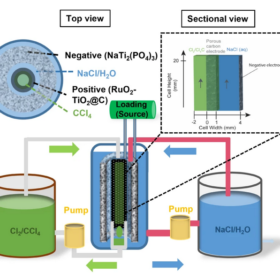
Membrane-free chlorine redox flow battery for stationary storage
A US-Chinese research group has developed a full chlorine membrane-free redox flow battery that is claimed to achieve a round-trip energy efficiency of 91% at 10 mA/cm2 and an energy density of 125.7 Wh/L. The device is based on an aqueous electrolyte made of sodium chloride (NaCl) which uses chlorine (Cl2/Cl−) redox couple as the active material for the positive electrode.

World has installed 1TW of solar capacity
The world has installed its first terawatt of hardware on Earth to generate electricity directly from the sun.
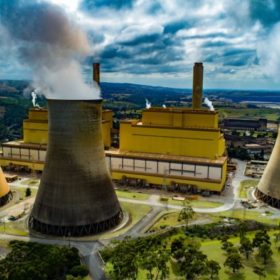
PV, battery, hydrogen park to replace coal plant in Australia
A multibillion-dollar solar, battery storage, wind and potentially green hydrogen project in the Australian state of Victoria is moving forward after securing backing from the Hostplus superannuation fund. The planned project is owned by Octopus Australia, under its joint venture with Clean Energy Finance Corp.
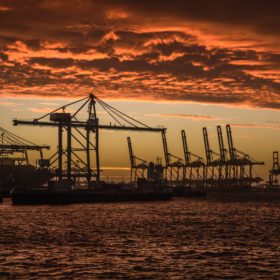
Paving the way for green hydrogen certification
The International Renewable Energy Agency has outlined a series of technical considerations for green hydrogen tracking systems. According to the document, a degree of flexibility should be taken into account in the short term to ensure that the nascent green hydrogen market can develop.
