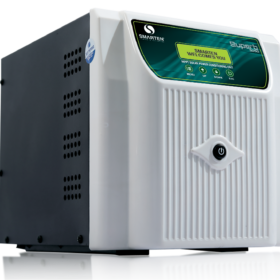
Smarten launches 2.4 kW hybrid PV power conditioning unit for offgrid applications
Smarten has released the Superb 3050 hybrid solar power conditioning unit (PCU) for offgrid applications. The 2.4kW product is priced at INR 19,999 ($260).
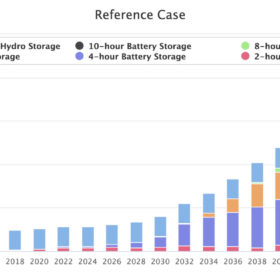
NREL’s storage projections for 2050
The National Renewable Energy Laboratory’s (NREL) final report on the future of storage presents “key learnings” from a series of six in-depth studies.
The mobility rEVolution: Honda ups the ante on EVs, solid state batteries
In other news, further Covid-19 lockdowns in China continue to negatively impact the EV battery supply chain and broader industry, Porsche is testing V2G capabilities, and Israeli startup Electreon announces extension of its wireless dynamic EV charging project in Sweden.

To speed interconnection, consider public control of grid operators, says US law professor
To speed the interconnection of utility scale solar and storage, “maybe we want somebody running the show that has more of an interest in getting all these resources in the grid,” said law professor Shelley Welton in a webinar for “100% clean energy states.”
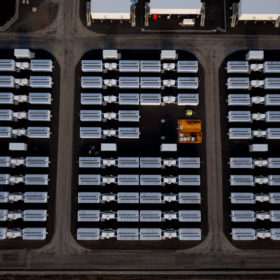
Neoen, AGL sign Australia’s first grid-scale virtual battery contract
French renewable energy developer Neoen has signed a seven-year agreement with Australian utility AGL to provide 70 MW/140 MWh of virtual battery capacity in New South Wales.
Brazil’s Cemig launches another wind, solar auction
The Brazilian energy company will award 10-year and 15-year power purchase agreements (PPAs) to projects exceeding 50 MW in size through this new procurement exercise.
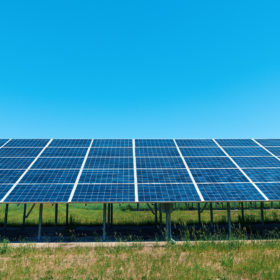
Bangladeshi fabrics maker invests in 100 MW solar plant
The solar park will sell power to the Bangladesh Power Development Board at a price of $0.1195/kWh under a 20-year power purchase agreement.
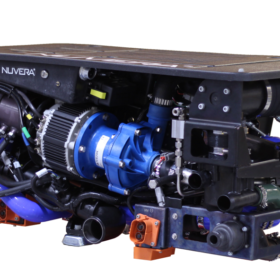
The Hydrogen Stream: Fuel cell engines for stationary power uses
In other news, Airbus and Kawasaki Heavy Industries plan to work together to prepare a hydrogen-fueled ecosystem, while Storgrundet Offshore and Lhyfe want to build a 600 MW hydrogen production plant in Sweden. Furthermore, Canada-based First Hydrogen has identified four industrial sites in the United Kingdom and is advancing discussions with landowners to secure land rights to develop green hydrogen production projects.
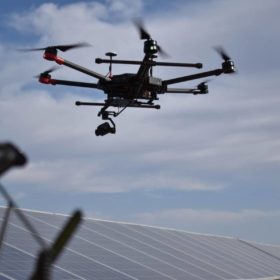
Solar drone inspection provider Raptor Maps secures $22 million in funding
The Boston-based firm provides solar inspection software-as-a-service, powered by machine learning and drone aircraft imagery.

Hybrid thermionic-photovoltaic converter for applications in thermal energy storage, waste heat recovery
A Spanish-Italian research group has developed a solid-state thermal-to-electric energy converter based on hybrid thermionic-photovoltaics (TIPV) for different applications. It consists of a three-terminal TIPV device made with a tungsten (W) thermionic cathode, a PV/anode structure made of an indium phosphide (n-InP) anode, and a photovoltaic cell based on indium gallium arsenide (InGaAs).
