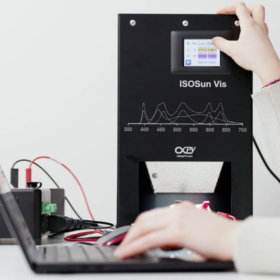
InfinityPV releases new compact solar simulator
The Danish company says its new product is ideal for small to medium-sized solar cell testing. It can simulate light conditions in the 390–700 nm range.
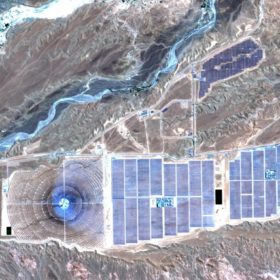
Morocco begins construction on 305 MW Noor Atlas solar program
Morocco’s state energy agency and national utility have signed power purchase agreements (PPAs) and begun construction on six Noor Atlas solar plants totaling 305 MW. The project – financed by KfW, the European Investment Bank and Bank of Africa – aims to expand renewables, support local industry and create regional jobs.

Africa’s next growth frontier: Why agrivoltaics are worth the long-term bet
Africa has abundant sunlight, arable land, and innovative farmers, and agrivoltaics offers a long-term strategy to boost food security, climate resilience, and energy access simultaneously. Success depends on coordinated policy, inclusive community engagement, and patient, innovative finance to build a viable, scalable market.
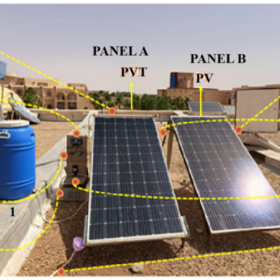
Water-spray cooling can improve PV module efficiency by 28% in arid environments
An Algerian research team has developed a smart water-spray cooling system for PV panels that activates only when temperatures exceed a set threshold, boosting efficiency while minimizing water use in desert conditions. The system raised power output and reduced module temperatures, offering similar efficiency to continuous cooling but with far lower water consumption, pump operation, and costs.
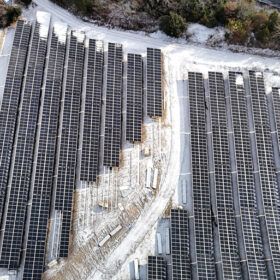
Japan’s 27th solar auction concludes with average final price of $0.029/kWh
Japan has allocated 79 MW of PV capacity in its latest procurement exercise. The lowest price in the auction was JPY 0/kWh.

Thermocold debuts air-to-water heat pump for commercial buildings
The new product line covers 124–644 kW in heating and 128–632 kW in cooling, operates down to -15 C, and supports various configurations with R454B or R410a refrigerants.
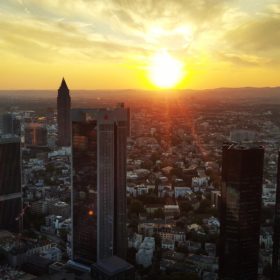
Photovoltaics reach 16.1% share of Germany’s electricity generation in 2025
Germany’s Federal Statistical Office (Destatis) says solar generation rose to 70.1 TWh in 2025, up 17.4% from the previous year, even as wind and hydropower output declined and natural gas generation increased 10.2%.

Photovoltaics for cattle dung gasification
Researchers tested a solar PV-powered system to gasify dried cattle dung, achieving higher energy recovery than grid-powered setups.Their techno-economic-environmental analysis shows the approach can cut emissions and be economically viable, though system utilization and operational factors strongly affect profitability.
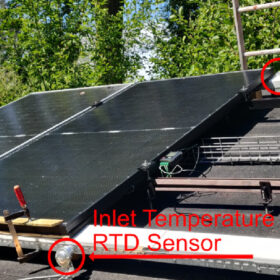
Air-based photovoltaic-thermal system can achieve significant energy savings in buildings
Researchers in Sweden have developed an air-based photovoltaic-thermal system that can preheat ventilation air and domestic hot water, cutting district heating demand by up to 16% for ventilation and 7% for hot water while also reducing peak heating loads in cold Nordic climates.
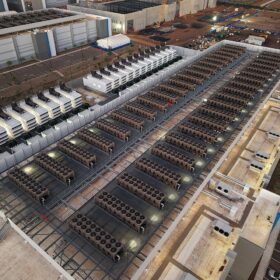
The limits to growth: The Malaysian way of navigating the data centre boom
Malaysia’s rising power demand, driven by industrial growth and data centers, is exposing grid and capacity constraints, prompting policies like Corporate Renewable Energy Supply Scheme (CRESS) to enable corporate renewable procurement while maintaining system cost recovery. A key factor is the System Access Charge (SAC), whose uncertain future trajectory affects long-term solar PPAs and investment decisions, making scenario-based modelling crucial for assessing project bankability.
