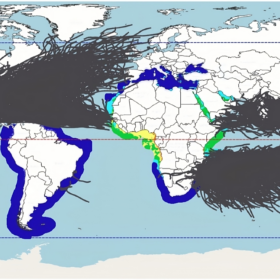
Offshore floating solar on calm seas could provide unlimited energy
In a new monthly column for pv magazine, the International Solar Energy Society (ISES) describes how regions that don’t experience waves larger than 6 m nor winds stronger than 15 m/s could generate up to one million TWh per year via offshore floating PV arrays. Most of the good sites are close to the equator, in and around Indonesia and tropical West Africa.
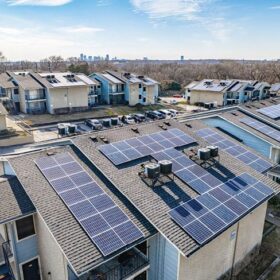
California puts multi-meter rooftop solar at risk with proposed decision
The California Public Utilities Commission (CPUC) has returned with another proposed decision to stack the deck against rooftop solar.
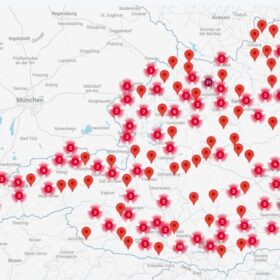
Austria publishes map of locations with available grid capacity for PV
The Austrian government introduced the Electricity Industry and Organization Act (ElWOG) two years ago, leading to the creation of a map of locations with available grid capacity for solar. The ElWOG require grid operators to be transparent about grid-connection capacity.

Pakistan designing new auction plan to deploy 9 GW of additional solar power
Pakistan is in the process of designing a new auction plan to deploy 9 GW of solar power. The initiative will involve the installation of 6 GW of large-scale solar projects, 2 GW of medium-scale solar projects, and 1 GW of rooftop solar capacity.
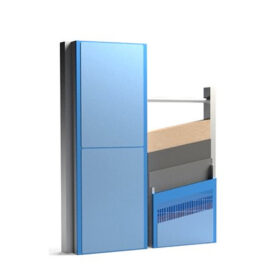
Novel BIPV material from South Korea
South Korean companies Posco and East-West Power are developing a new building-integrated solar photovoltaic solution. The new product uses special galvanized steel as the panel’s backside that Posco says lasts five to ten times longer than standard steel.
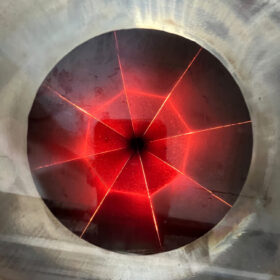
Synhelion starts building solar tower for cement production
Synhelion’s solar tower technology harnesses energy from a field of solar mirrors and concentrates it onto a receiver. The receiver converts the solar radiation into high-temperature process heat, which is then directed to a thermal chemical reactor. This reactor produces syngas, which is a mixture of carbon monoxide (CO) and hydrogen (H2).
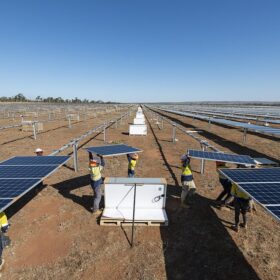
Australia’s latest tender for generation, storage largely oversubscribed
Investors have submitted bids for 3.1 GW of wind and solar projects, along with 1.6 GW of long-duration storage projects, in response to the New South Wales government’s latest tender for renewable energy generation and storage capacity.
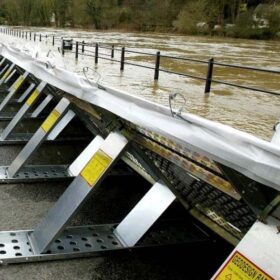
Including flood, erosion hazards in solar project site selection
New research from Turkey shows the need for a more rigorous approach to PV site selection due to increasing hydrological extremes. The scientists claim that fixed-distance buffer zones are not sufficient to protect solar farms from flood and erosion hazards.
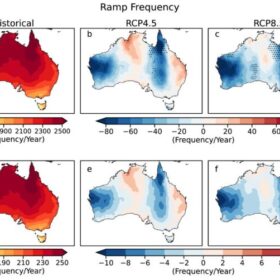
Modeling shows how solar ‘ramps’ threaten Australia’s grid stability
PV developers in Australia are being told to anticipate more frequent solar power fluctuation events, or “ramps,” which could potentially affect the stability of grid-connected solar power.
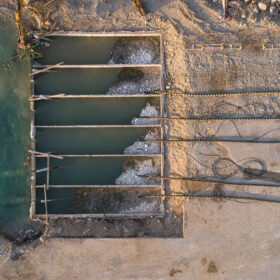
Weekend Read: Curtailment crisis in Cyprus
The typical volume of excess clean power wasted daily on the island has rocketed since last year. With a fossil fuel industry veteran heading the energy department after February’s presidential election, what prospect is there of a green transition?
