
Australian shipbuilder to deliver world’s largest all-electric ferry
Australian’s Incat Tasmania is building the world’s largest all-electric ship at its shipyards in Hobart. The 130-metre-long vessel is to be fitted with a 40 MWh battery energy storage system that will power a series of electric propulsion system and waterjets.
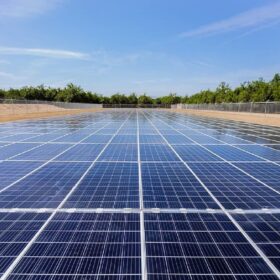
Driving down solar costs key to unlocking green hydrogen future
Jim Tyler, CEO of solar tech specialist Erthos, says that reducing the cost of solar electricity will be needed to unlock the next chapter of the energy transition: a green hydrogen economy.
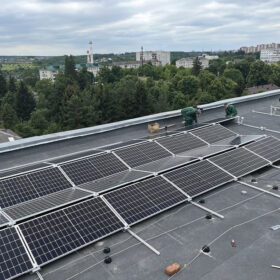
Weekend Read: ‘Please open your wallets’
Donations of cash and solar equipment have thrown a lifeline to schools, hospitals, and communities in Ukraine but the country needs much more, including long-term backing for the recovery of its industry, reports Ian Skarytovsky.
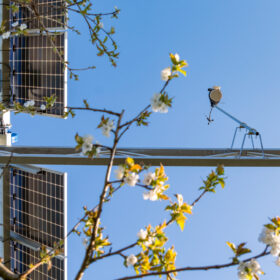
Sun’Agri reveals agrivoltaics performance in heat waves
France’s Sun’Agri has revealed the results of a test showing how agrivoltaic installations effectively lower temperature and relative humidity during periods of drought.
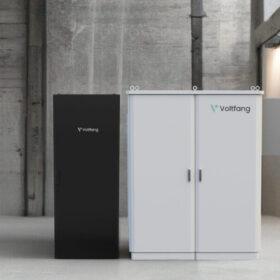
Voltfang unveils outdoor storage system with recycled EV batteries
Germany’s Voltfang has developed outdoor stationary storage systems featuring recycled electric-vehicle batteries with capacities ranging from 33 kWh to 644 kWh.
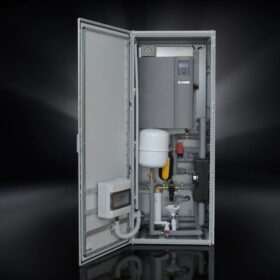
3U launches heat pump for residential applications
Germany’s 3U Holding AG said its ThermCube heat pump is an ideal solution for new and existing detached and semi-detached houses with a total heat demand of between 6 kW and 11 kW. The new product has reportedly a heat output of 2.33 kW to 8.20 kW and a flow temperature of up to 70 C.

El Niño threatens US winter solar generation
In a new weekly update for pv magazine, Solcast, a DNV company, presents that El Niño will likely bring lower than normal solar power production through winter in the United States. Its analysis is based on data collected from previous El Niño events.
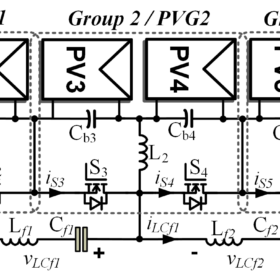
New DPP converter to improve yield in PV systems under permanent mismatch
Brazilian scientists have created a new hybrid converter topology based on differential power processing (DPP) that can help reduce power losses in PV systems under permanent mismatch conditions, as well as temporary ones caused by partial shading, dirt and snow. The converter consists of a hybrid topology that combines the PV-to-PV and PV-to-Bus architectures and reportedly solve some of the issues presented by both configurations.
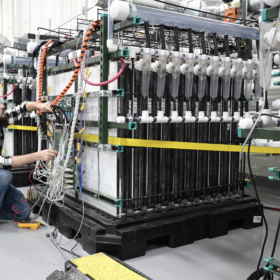
Multi-day energy storage increases grid capacity by factor of 10
Form Energy has released a white paper that provides further evidence that multi-day energy storage, like its iron-air technology, can substantially reduce the costs for New York to achieve its ambitious decarbonization targets.
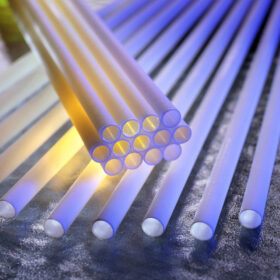
Australian startup aims to produce hydrogen with 30% less electricity
The Commonwealth Scientific and Industrial Research Organisation (CSIRO), Australia’s national science agency, has teamed up with RFC Ambrian to form a new company to commercialize electrolysis tech. CSIRO said the aim is to produce hydrogen with 30% less electricity than existing alkaline and polymer electrolyte membrane technologies.
