
Italy’s steeplechase towards battery deployment
In the next ten years, according to Milanese consultant REF-E’s simulations, storage in Italy will mostly be driven by opportunities in the ancillary services market. After 2030, when renewables will provide most electricity, REF-E believes the price spread between different hours of the day should be high enough to cover the cost-per-cycle of energy-intensive storage. Energy expert Virginia Canazza discussed the topic with pv magazine.
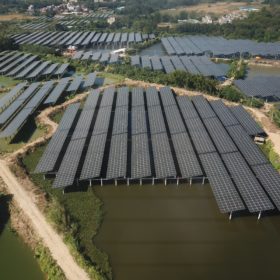
Solar park on Chinese fish pond achieves LCOE of $0.022/kWh
The 120MW facility is selling power to State Grid Corporation of China at a price of RMB0.453/kWh ($0.0762). It relies on 21.2%-efficient JT SSh(B) 450W/455W high-efficiency dual-glass panels provided by Chinese manufacturer Jetion.
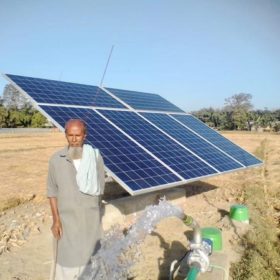
Solar water pumps for farmers
With solar water pumps, farmers have access to high-quality power available for irrigation. These systems are portable and can be assembled at any preferred location. With the growing utilization of these systems, the costs have decreased substantially, making them an efficient, convenient and cost-effective solution for grid-isolated rural areas.
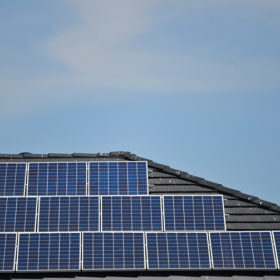
Most popular PV panel, inverter brands for Australia in 2021
SunWiz has identified the most popular solar panel and inverter brands in the Australian market. In total, 5.2 GW of solar was installed in Australia in 2021, putting the country’s cumulative tally at 26.9 GW.
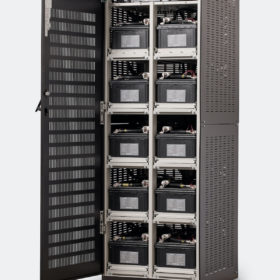
Nickel-zinc batteries for large scale backup power
Nickel-zinc batteries will be coupled with wind power to support 30MW of critical IT load at a data center in Wyoming, in the US. The batteries’ lifespan can be up to 15 years, while its roundtrip efficiency stands at 85%.
The Hydrogen Stream: Electrolyzer sales expected to quadruple this year
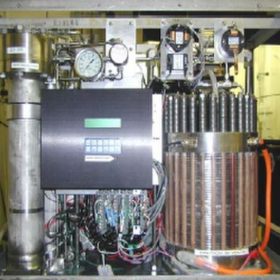
According to BloombergNEF, electrolyzer shipments may reach up to 2.5GW in 2022, up significantly from 458MW last year. China and the United States will become the world’s first and second markets, respectively.
Pacific Energy unveils hybrid power solution based on PV, electric turbo compounding
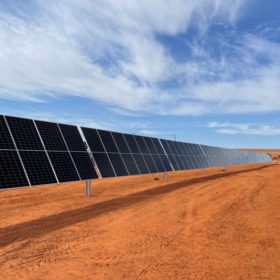
KPS Power Generation has converted a 10 MW diesel-fueled power station at a mine in South Australia into a hybrid PV facility.
Oman inaugurates 500MW Ibri 2 solar field
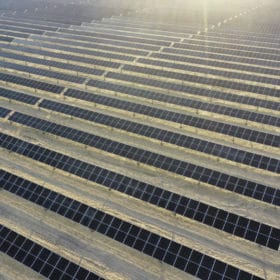
Some 1.5 million bifacial panels make up the power plant in Ad-Dhahirah governorate which was constructed in just 13 months by ACWA Power, the Gulf Investment Corporation and Kuwaiti developer Alternative Energy Projects Co.
Czechia’s first floating photovoltaic plant
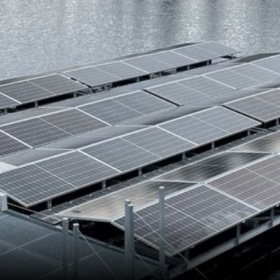
Operated by Czech utility CEZ Group, the pilot solar plant will be located at different heights during the charge and recharge cycles of a pumped-hydro plant and the difference in height may reach up to nine meters.

Philippines utility Meralco launches 850MW renewables tender
Through the procurement exercise, the power utility is seeking proposals to deploy around 600MW of capacity that will have to start providing power in February 2026, and another 250MW to begin commercial operations in February 2027.
