
Solar tower for world’s largest pasta producer
The German Aerospace Center is working with partners in Italy to supply Italian pasta maker Barilla with electricity and heat from renewable sources.
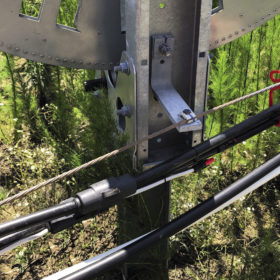
Shoals, solar balance-of-system player, had a strong 2020 and sees an even stronger 2021
Dean Solon of Shoals Technologies Group: “The short version is that it’s been a damned good year.” An interview with Shoals covers the growth of large solar projects in the U.S., high AC/DC ratios and the real costs of using cheap components.
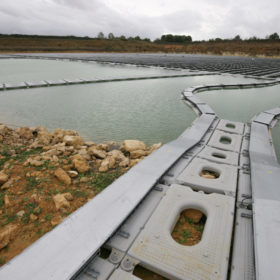
Floating PV deployed at quarry in France
Sorégies has built a 2.7 MW floating PV array at a quarry in Nouvelle-Aquitaine, France.
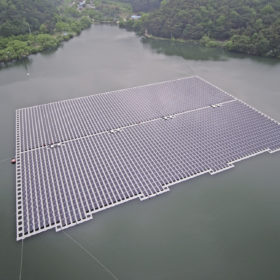
Tender launched for utility-scale floating PV in Brazil
The state of São Paulo’s energy supplier is seeking proposals for four floating solar projects, ranging in size from 1 MW to 30 MW.
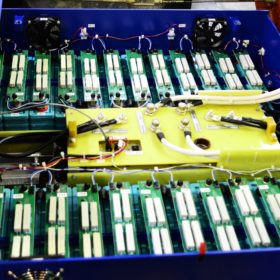
Russian nuclear giant Rosatom enters storage business
The state-owned company will manufacture module type lithium-ion traction batteries for electric vehicles, as well as energy storage systems for emergency power supplies, renewable energy resources, and the smoothing of load demand.
India’s wind-solar hybrid capacity may reach 11.6 GW by 2023
According to a new report by the Institute for Energy Economics and Financial Analysis (Ieefa) and JMK Research, the Solar Energy Corporation of India (SECI) has so far tendered a total of 12,860 MW hybrid capacity.
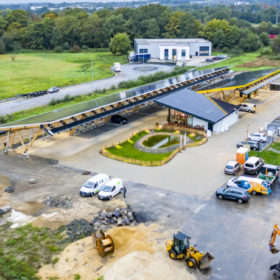
Solar-wind-storage EV fast charging for German highway
Fastned and Tesla have opened what they claim is the largest fast-charging park in Germany. Electric vehicles will be charged with green electricity – some of it from on-site solar and wind generation and the project includes 2 MWh of battery storage.
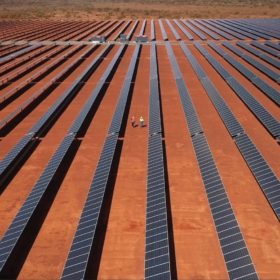
‘There has never been a better time for hybrid microgrids’
In a move that’s sure to pan out well for the Granny Smith gold mine in Western Australia, Aggreko has installed one of the country’s largest renewable energy microgrids, with 7.7 MWp of solar to be integrated with the site’s existing power station. pv magazine recently sat down with Karim Wazni, Aggreko’s managing director of microgrids and storage solutions, to discuss how microgrids and energy storage can help transition Australia’s resource sector.

US corporate solar market reaches 8 GW
The new Solar Means Business report by the Solar Energy Industries Association indicates that low prices and climate change commitments are driving corporate interest in solar and storage. Apple, Amazon and Walmart lead the list of top players.

Indian solar tenders to incentivize advanced local manufacturing
Policymakers could amend solar auctions to encourage manufacturing as the nation chases an aggressive solar target of 300 GW by 2030.
