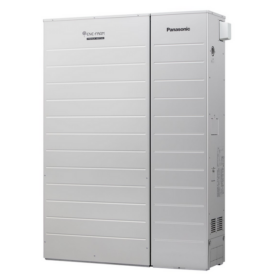
Panasonic debuts fuel cell cogeneration system for PV‑integrated homes
Panasonic has launched a new home fuel cell system for detached houses, designed to boost solar self-consumption through HEMS‑based smart scheduling. The unit generates electricity and heat from gas, supports demand response, and can supply emergency power during outages.

Storm train hits Western Europe PV as East clears under cold
In a new weekly update for pv magazine, Solcast, a DNV company, reports that January 2026 saw Europe’s coldest month since 2010, with Eastern Europe and Scandinavia enjoying above-average solar irradiance under stable, dry air, while the UK, Spain, and Portugal faced record cloudiness and rainfall that sharply reduced PV output.

How to detect PV system underperformance using only AC-side inverter data
An Australian research team has developed a five-step, rule-based method that detects and classifies underperformance in PV systems using only AC-side inverter data. Validated across more than 1,000 systems, the approach offers a low-cost, low-intervention solution for improving reliability, fault response, and PV system performance.

World’s largest steam-producing heat pump comes online in Finland
Turboden, part of Mitsubishi Heavy Industries, has energized what it calls the world’s largest steam-producing heat pump, delivering 12 MWth of superheated steam using low-grade waste heat and CO₂-free electricity with a coefficient of performance 10% above its guaranteed value of 2.

Space-based solar could be competitive by 2040, UK government finds
Investment and support could make small-scale space-based solar power (SBSP) viable, with potential for electricity generated in orbit to participate in UK contracts for difference (CfD) scheme according to new report. Launch costs have biggest impact on levelized cost of electricity (LCOE), according to analysis.

The effects of solar module elevation on ground-mounted PV
Scientists in Hungary found that ground-mounted PV modules at an intermediate elevation of 1.1 m achieve the highest efficiency and power output due to improved airflow and reduced cell temperature. Their study also estimated a levelized cost of electricity of $0.0843/kWh and 577.78 kg CO₂ mitigation over 25 years, while noting results are specific to concrete surfaces.
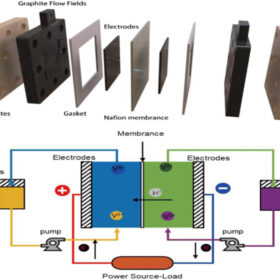
De-risking redox flow batteries for grid-scale storage
Following their review of redox flow battery research, Norway-based scientists told pv magazine that despite its high upfront capital costs and lower energy density relative to metal-ion, the technology can offer safety, reliability, and scalability advantages for standalone, large-scale applications.

Luxembourg launches new tender for C&I solar
Luxembourg’s Ministry of the Economy has launched a €3 million ($3.54 million) tender to support commercial and industrial (C&I) solar projects between 30 kW and 200 kW, with applications open until April 17.
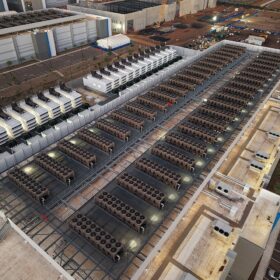
Mexico could become data center hub, but clean power lags behind
Mexico is attracting US data centers seeking faster power connections, but these facilities will initially rely on firm gas generation from the Comisión Federal de Electricidad (CFE), with renewables as a potential future option, Mexican energy expert Santiago Barcón told pv magazine.
Global-warming-induced degradation could raise rooftop solar LCOE by up to 20%
A global study finds climate change will sharply increase high-temperature risks, accelerate degradation, and raise costs for rooftop PV, with economically disadvantaged regions hit hardest. Researchers warn current IEC standards underestimate future risks, urging urgent updates to avoid stranded assets and rising electricity costs.
