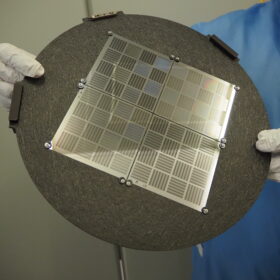
Nanostructured silicon could push solar cells beyond Shockley–Queisser limit
The LEEMONS project is researching nanostructured silicon that uses low-energy electron multiplication (LEEM) to allow one high-energy photon to generate multiple electrons, reducing energy losses in solar cells. By creating ultra-thin amorphous silicon layers inside crystalline silicon via ion implantation, the scientists aim to boost solar cell efficiency beyond the Shockley–Queisser limit while keeping compatibility with existing manufacturing methods.

Sigenergy unveils 166 kW inverter for C&I solar
Sigenergy has launched a 166 kW IP66-rated inverter for C&I solar and storage offering nine MPPT trackers and flexible AC/DC connections. The launch coincided with the opening of its Nantong Smart Energy Center, a 136,000 m² facility for R&D, manufacturing, and global delivery.

‘Even when I sensed bias, I focused on doing my job’
This week Women in Solar+ Europe gives voice to Sabina Blitek, General Counsel at Netherlands’ R.Power Renewables. She says women in male-dominated industries, like energy and finance, can overcome bias by consistently demonstrating competence, believing in their own potential, and leading by example.
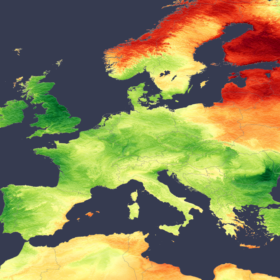
Cold, clear skies boost northeastern Europe’s solar while storms dim the west
In a new weekly update for pv magazine, Solcast, a DNV company, reports that February saw a sharp divide in Europe’s solar conditions. Northeastern regions experienced clear, cold weather with irradiance 20% above average, while western and southern Europe endured persistent storms and widespread irradiance deficits.

Bahrain reveals qualified bidders for 100 MW BAJ Solar IPP project
The Bilaj Al Jazayer Independent Power Project will be developed under a public-private partnership on a build-own-operate basis.

Increased spacing between solar module rows boosts agrivoltaics viability
U.S. researchers developed a framework showing that wider spacing between solar PV rows can make agrivoltaic systems economically viable for large-scale mechanized farming. Their simulations in Colorado demonstrated that optimized row spacing maintains crop production while improving combined agricultural and energy revenues.
All 2022–2024 cyberattacks on energy infrastructure at a glance
A new global dataset of 119 energy-sector cyber incidents from 2022–2024 shows EU and BRICS countries, followed by the US, are most affected. Attacks targeted power, oil, gas, and nuclear infrastructure, driven by both financial and political motives, with diverse threat actors involved.
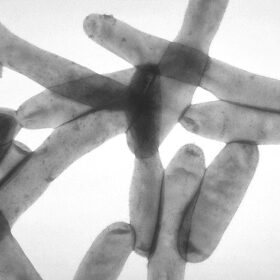
Heat pumps are transforming domestic hot water production – How to avoid hygiene risks?
Heat pumps are increasingly used for domestic hot water in Europe due to their efficiency and compatibility with solar power, but their lower operating temperatures can create conditions where Legionella pneumophila may grow if systems are poorly designed. Proper hydraulic design, temperature control, and periodic thermal disinfection ensure both high efficiency and safe, hygienic operation.

Toshiba rolls out AI-powered solar plant portfolio management platform
Toshiba has unveiled a PV management platform within its Spinex for Energy portfolio that enables real-time monitoring and O&M of multiple solar plants.
The system uses AI to track plant performance, detect faults, calculate capacity and PR metrics, automate reporting, and support troubleshooting.
New simulation platform lets energy operators train against realistic cyberattacks
Researchers at Germany’s Fraunhofer FKIE institute developed PowerRange, a virtual simulation platform that helps power grid operators safely test cybersecurity measures and respond to realistic cyberattacks. The platform supports both traditional and renewable grids, offering immersive training across IT, OT, and control systems while highlighting the importance of coordination, communication, and practical defense strategies.
