
Malta launches 15 MW solar tender
The government wants to procure several 1 MW-plus solar plants. The tender is the third of its kind, and part of the 50 MW incentive scheme the island’s government launched in November 2017.

Norway deployed 51 MW of solar in 2019
The figure took the nation to a cumulative 120 MW at the end of the year, according to figures published by Norwegian solar industry organization the Solenergiklyngen. Around 2 MW of the capacity added in 2019 came in the form of off-grid projects.

Solar tariffs of less than $0.034 not financially viable in India
Solar developers in India must consider a range of risks to secure reasonable returns on solar projects, according to research by the Institute for Energy Economics and Financial Analysis and JMK Research & Analytics.
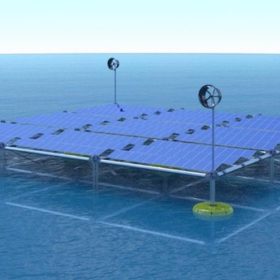
Solar arrays on wave energy generators, along with wind turbines
German startup Sinn Power has combined wave, wind and solar power to create what it claims is the world’s “first floating ocean hybrid platform.”

Romania re-introduces PPAs to attract investors
The Romanian government has decided to re-introduce directly negotiated Power Purchase Agreements (PPAs) to boost investment in its renewables sector, but only projects commissioned after June 1, 2020 will be eligible.

Czech government plans retroactive cuts for PV incentives, again
According to the Czech Solar Association, the move against solar will likely trigger defaults for thousands of PV projects. The Czech government also plans to build more nuclear power plants and has vowed to extend the lifespan of its coal-fired plants.

Investors bet $27.5 million that Nanotech Energy’s graphene battery breakthrough is the real thing
The startup claims to be “the world’s top supplier of graphene” and plans to release a non-flammable, environmentally friendly lithium battery that can charge “18 times faster than anything that is currently available on the market” — within the next year.
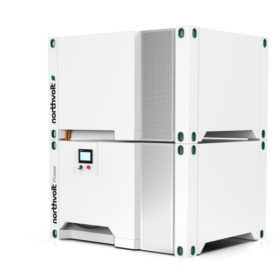
Northvolt unveils modular lithium-ion battery
The Swedish storage system manufacturer said its Voltpack Mobile System can be used in different market segments, particularly for remote or weak grids. The battery has a scalable storage capacity ranging from 245 kWh to 1,225 kWh. Swedish utility Vattenfall is now testing the system’s capabilities.

Harvesting electricity from shadow
Researchers in Singapore have created a device that can produce electricity from the contrast in illumination between lit and shadowed areas under weak ambient light. Although not directly related to solar, this new technology opens up new horizons for producing clean energy under indoor lighting conditions.

Borehole thermal energy storage for solar
The municipality of Drammen, Norway, has started testing a seasonal PV storage project that uses boreholes in the ground. The operators of the project are using electricity from PV modules to produce heat via a CO2 heat pump and outdoor air. The heat is produced by the CO2 pump during the spring, summer and fall, in addition to heat produced by solar thermal collectors.
