
Costa Rica doubles feed-in rates for new distributed solar producers
Costa Rica’s state utility has approved an average 111% rate increase for new distributed generators under revised eight-year contracts.
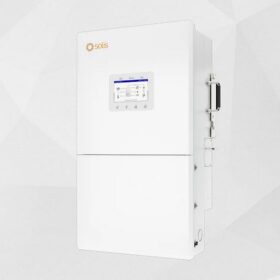
Solis launches 16 kW residential and 60 kW commercial hybrid inverters
The Chinese manufacturer released two new hybrid string inverters that range from 9.6 kW to 16 kW for the residential market, and from 30 kW to 60 kW for the commercial market.

Western wildfires, storms cut solar gains in the West while Eastern US sees boost
In a new weekly update for pv magazine, Solcast, a DNV company, reports that frontal systems, widespread wildfires and an omega block pattern contributed to highly mixed irradiance anomalies across North America in September. Solar conditions underperformed in much of the West and Midwest, while the Northeast, South, and parts of Canada recorded a strong month.

New research confirms rooftop PV affects urban temperatures, cooling demand
Using Lyon as a case study, an international research team has simulated the effects of rooftop photovoltaic (PV) coverage in an urban area at three levels: 25%, 60%, and 100%. The results have shown that solar panels can raise daytime temperatures by up to 0.72 °C, while cooling nighttime temperatures by up to 0.42 °C. In addition, daytime air conditioning demand has decreased by about 5%.

Brazil imports 10.6 GW of solar modules in H1
Brazil imported 10.6 GW of solar modules in the first half of 2025, down slightly year over year as developers rushed to secure shipments before an import tax hike, according to Greener.

Building-integrated concentrating photovoltaics for vertical applications
An Indian-British research team has developed a building-integrated linear concentrating PV facade by sandwiching an asymmetric compound parabolic concentrator, PERC cells, and encapsulation layers between two sheets of glass. The system was tested under both indoor and outdoor conditions and its payback period was found to be of up to 11 years.
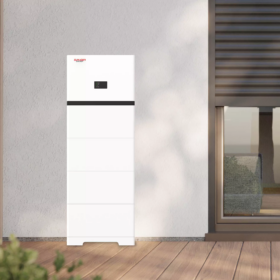
Sunwoda Energy unveils 40 kWh storage system for homes, businesses
Chinese manufacturer Sunwoda Energy introduced a modular all-in-one energy storage system with up to 40 kWh capacity and 30 kW output for residential and small commercial use.

Brazil opens consultation on nationwide smart meter deployment
Brazil’s Ministry of Mines and Energy (MME) has launched a consultation that could lead to the installation of 3.6 million smart meters as part of efforts to modernize the power sector and cut losses.
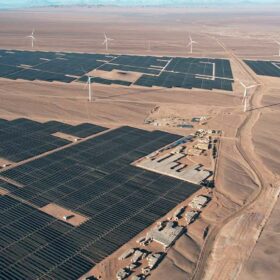
Chile’s PV capacity tops 11.27 GW
Chile reached 11.27 GW of PV in August 2025, with solar accounting for 60% of its renewable capacity.
European electricity spot market shifts to 15-minute trading blocks
The European Power Exchange (Epex Spot) will switch its day-ahead market from hourly to 15-minute intervals on Sept. 30, a change mandated by the European Union that is expected to improve solar and wind integration, boost battery trading opportunities, and support dynamic tariffs.
