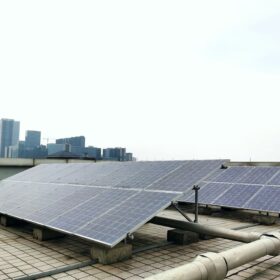
Guyana launches net billing scheme for rooftop PV
Guyana has introduced a net billing program for rooftop PV systems up to 100 kW and for larger systems based on a customer’s maximum demand. It aims to expand distributed generation and reduce grid dependency.

How albedo interacts with different rooftop PV system patterns
Researchers have simulated 160 cases of PV rooftop installation in southern and northern Italy. Among changing parameters were size and type of the panels, as well as their roof cover rate. The considered albedos were 20%, 40%, 60%, and 80%, representing different types of roof materials.

French company offers router capable of redirecting surplus solar to water heating
French energy cooperative Solarcoop has launched a solar router that redirects surplus photovoltaic power from self-consumption systems to electric water heaters or other resistive loads, and can also control additional devices such as heat pumps.

Photovoltaics vs. photovoltaic-thermal
Researchers in India say that photovoltaic-thermal (PVT) systems offer greater performance stability than conventional PV systems in hot climates. Using irradiance and temperature data, the team applied a Random Forest model that predicted efficiency classes with 97% accuracy.
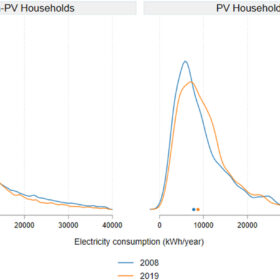
New research confirms residential PV tends to increase household power consumption
New Swiss research shows PV-powered homes can increase power consumption by up to 11% compared to non-solar households. This rise is linked to electric vehicle adoption or other high-usage appliances, which the study’s author notes is not inherently negative or wasteful.

The best tilt angle to improve PV system performance on low-cost buildings
Researchers have demonstrated that the theoretical optimal tilt for rooftop solar energy production in low-cost buildings in Nigeria is approximately 5.67°. Their modeling suggests to adopt south-facing roofs for PV generation in the Global South.
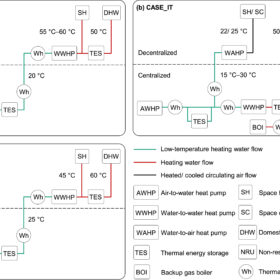
Researchers demonstrate technical feasibility of retrofitting PV-driven heat pumps in multi-family buildings
A research group led by Germany’s Fraunhofer ISE has conducted what it describes as the first empirical study on PV-assisted two-stage HP systems in existing multi-family buildings. Its findings show that substantial PV electricity exports result in greater avoided non-renewable primary energy use.

Segen, BNP Paribas offer C&I energy storage, solar finance product
The new partnership will initially provide financing to help crowd in investment for photovoltaic systems and energy storage in Germany and the United Kingdom.
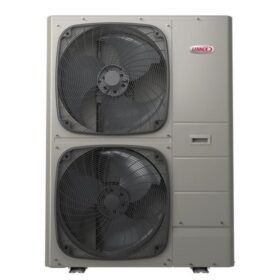
Lennox launches residential heat pump with space-saving design
The US-based company said its new EL18KSLV Side Discharge Heat Pump uses R-454B as the refrigerant and has a size ranging from 2 tons to 5 tons.

New model for predicting residential PV fleet yield
To predict the energy yield of residential solar PV fleets based on limited information, Dutch researchers developed a probability-based mathematical model that provides rapid sky view factor (SVF) calculations, protects PV plant owner privacy, and was shown to be effective for studying PV potential in urban areas.
