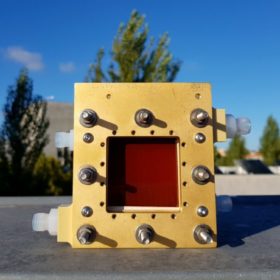
Straight to storage via solar integrated batteries
Scientists in China evaluated the prospects for various approaches to integrating both solar generation and energy storage in a single device. Their work outlines several ways this could increase the efficiency of solar energy storage, and recommends that future research on this area should focus on integration of materials with the highest specific capacity for energy storage, alongside the dual function of solar energy harvesting.
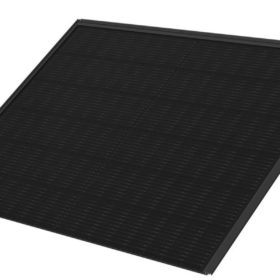
Aleo Solar unveils 345 W rooftop photovoltaic module
The new panel from the German manufacturer may also be used as a solar tile and is claimed to be particularly suitable for historical buildings and aesthetically demanding new construction and renovation projects.

Hysata brings capillary-fed eletrolyzer tech closer to commercial production
Australian startup Hysata is seeking to commercialize a breakthrough made at the University of Wollongong which CEO Paul Barrett describes as a “brand new category of electrolyzer” with 95% system efficiency.
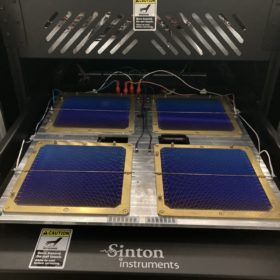
Using p-type wafers in heterojunction solar cells, not a lost battle
An international research group has reconstructed the trajectory of p-type wafers in the heterojunction solar cell segment and has identified the lack of knowledge about boron-oxygen related light-induced degradation (BO-LID) as the main cause for the limited adoption of these wafers and the success of their n-type counterparts. According to the scientists, however, there is still big room for improvement for p-type technologies in heterojunction cells.
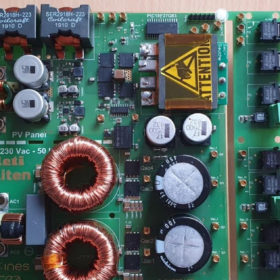
Photovoltaic micro-inverter based on gallium nitride transistors
Scientists from France’s CEA-Ines developed a 400 W micro-inverter with a power density of 1.1 kW/L and an efficiency of 97%. The device utilizes GaN 600V diodes and power transistors developed by CEA’s electronic branch CEA-Leti.

The role of seasonal demand in an all-electric scenario
Peak solar production does not coincide with peak heating demand, and a team of researchers determined that meeting this demand with renewables alone will require massive deployment of renewables on top of existing fossil generation.
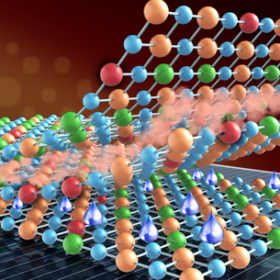
Surface engineering for an 18.6% efficient large-area inverted perovskite solar cell
Scientists in China worked with nickel-oxide as a charge transport layer in a perovskite solar cell, and were able to overcome several of the performance challenges associated with this material through careful surface engineering. Using this approach, the group fabricated an inverted perovskite solar cell measuring 156×156 mm that achieved 18.6% efficiency, along with ‘remarkable’ stability, according to its designers.
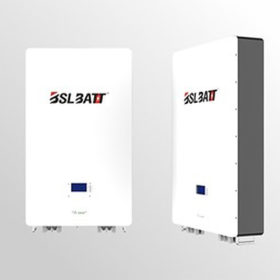
New residential lithium-ion battery from China
Chinese manufacturer Bslbatt has unveiled an upgraded version of its residential battery. The device has a storage capacity ranging from 5.12 to 12.8 kWh and is reportedly able to provide steady operation for up to 6,000 charge cycles.
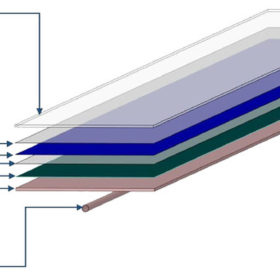
Photovoltaic thermal panel with overall efficiency of 83% via MXenes nanofluid
UK researchers have demonstrated a photovoltaic thermal panel that utilizes an MXene/water nanofluid for heat transfer. They said the nanofluid is not only able to improve the thermal and electrical performance of the panel, but also to reduce its size by 14.5%.

Forecast methodology for photovoltaic power yield during solar eclipses
In October there will be a partial solar eclipse in Central Europe. The Fraunhofer IEE has developed a solution that reportedly enables the most accurate forecast possible of the photovoltaic feed-in power during the extreme event.
