
Solar in uncommon spaces
With land-use concerns on the rise, large-scale solar projects are increasingly being built on everything from landfill sites to water reservoirs. Here’s an overview of the state of the art.
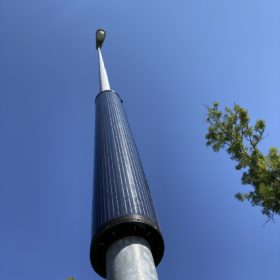
Cylindrical solar panel for street lighting
Developed by an Italian manufacturer, the panel is available in three versions with a power output of 100, 120, and 240 W and has a weight of 5 kg. It is encapsulated in thermoformable plastic technical polymers and can be connected in series with other modules around the same post.
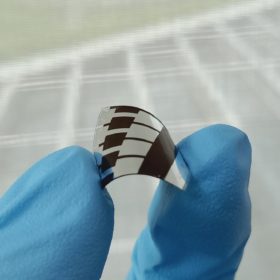
Co-evaporated perovskite solar cell with 20.6% efficiency
Researchers in Singapore have built what they claim is the industry’s most efficient, large-area co-evaporated solar cell. According to their findings, the device has exhibited remarkable thermal stability and could reach commercial maturity within the next few years.
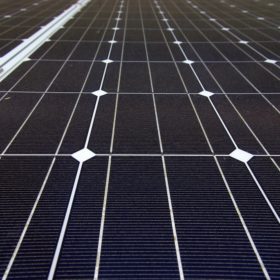
Cooling PV panels with water and cotton mesh
Scientists in Russia have developed an active cooling technique that spreads water on both sides of the module and uses a cotton wick mesh to absorb and spread the water that comes on the rear side. The system is able to reduce significantly a module’s operating temperature and lead to an overall improvement of 30.3% in its output power.

Australian startup sets 25.54% efficiency record for silicon cell
SunDrive said it has created the most effective commercial-sized silicon solar cell in the world, achieving an efficiency figure of 25.54% in testing carried out by Germany’s Institute for Solar Energy Research (ISFH).
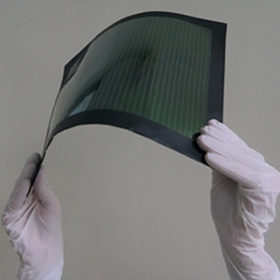
Toshiba claims 15.1% efficiency for polymer film-based large-area perovskite solar module
The result is claimed to be the highest efficiency ever reached for a large-area, polymer film-based perovskite photovoltaic module. The device has an area of 703 square centimeters and was fabricated through a new coating method.
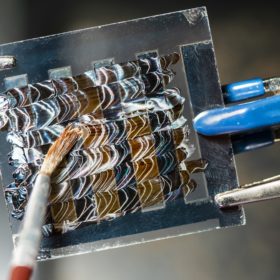
NREL scientists test back-contact architecture on perovskite solar cells
Scientists in the United States explored the use of all back contact architectures for perovskite solar cells. The group notes several advantages to this strategy, as well as challenges to overcome. Ultimately, the work outlines a route to cell efficiencies better than 20%.
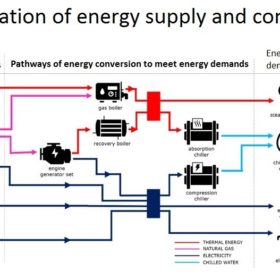
Mathematical model to couple PV, wind with cooling-heating-power systems
Brazilian researchers have proposed a new mathematical model to change parameters for wind and solar resources and different levels of energy demand. The model was originally conceived for tropical regions, but it can actually be used in any location. The new methodology models a highly complex system featuring wind turbines and PV modules, as well as solar collectors, fuel lines, gas boilers, engine-generator sets, recovery boilers, absorption and compression chillers, and grid electricity.
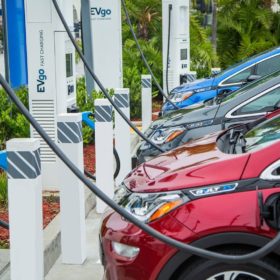
How safe are smart EV chargers?
Research has uncovered critical security threats associated with a number of common smart electric-vehicle chargers, but it’s not too late or too logistically difficult to remedy the issues.
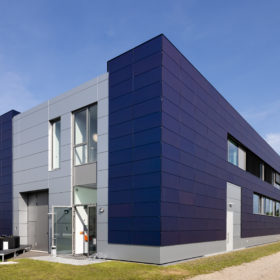
Solar facade with frameless design
The frameless design of the 50 kW facade was made possible by a concealed suspension technology that, according to its creators, eliminates the need for additional edging at the edge of the module. The installation was built with 135 W CIGS solar modules.
