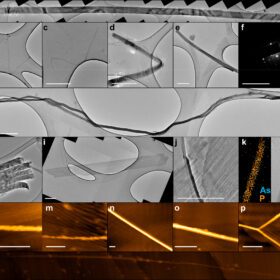
Phosphorus-arsenic nanoribbons may improve solar cell performance
UK researchers have developed ultra-thin nanoribbons, just 1 atom thick, by combining phosphorus and arsenic alloys. The nanoribbons offer excellent conductivity, even at temperatures exceeding -143.15 C, and have the potential to enhance charge flow in solar cells.
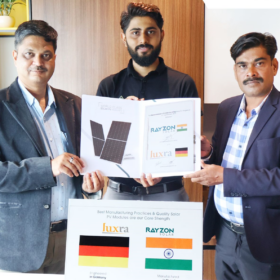
Luxra, Rayzon Solar set up PV module production venture in India
Swiss-German company Luxra Group and India’s Rayzon Solar have agreed to set up a joint venture for PV module production in India. The partnership will combine Luxra’s technology and Rayzon’s operational expertise in PV panel manufacturing.
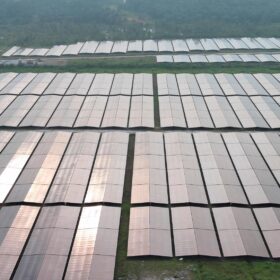
GoodWe finalizes 10.9 MW solar plant in Malaysia
Chinese solar inverter and battery producer GoodWe has completed the construction of the 10.95 MW Solar Citra Project in Malaysia, with Apricum senior advisor Moritz Sticher telling pv magazine that although the scale of the plant is ‘small’ every project in the Southeast Asian country counts.
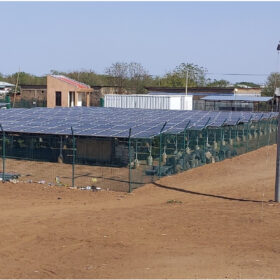
Assessing non-linear tradeoffs in photovoltaic mini-grids
Researchers in Sweden investigated the complex non-linear tradeoffs between capacity expansion costs and reliability levels of off-grid PV mini-grids and found that capacity expansion based solely on cost-minimization may result in several reliability issues.
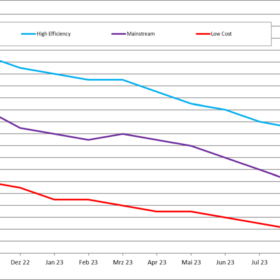
Solar module price falling, with no end in sight
Solar module prices have never fallen so sharply in such a short period of time. One reason for this is the “PV module glut” in warehouses in Europe, according to pvXchange’s Martin Schachinger.
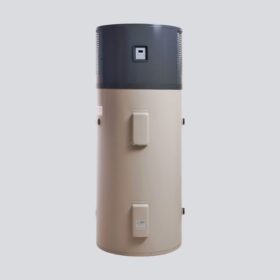
Rinnai launches hot water heat pump for residential applications
The new heat pump can purportedly provide hot water at a temperature of up to 70 C. It is specifically designed for climatic conditions with temperatures ranging from -10 C to 42 C, as well as coastal locations.
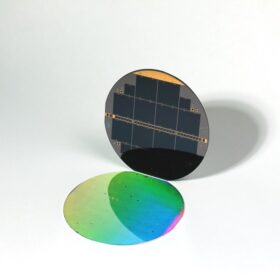
Fraunhofer ISE, AMOLF claim record efficiency of 36.1% for silicon-based multijunction solar cell
The two research institutes said the multijunction solar cell is based on silicon, gallium indium phosphide (GaInP) and gallium arsenide (GaAs). The device utilizes a specially designed metal/polymer nanocoating that reportedly optimizes the distribution of light scattering beyond the total internal reflection critical angle in the cell.
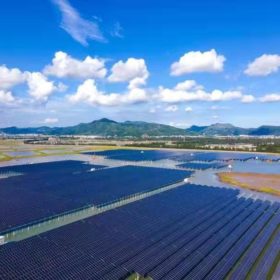
Chinese PV Industry Brief: China to add 170 GW of PV in 2023, says S&P
S&P Global Commodity Insights says it expects China to install 170 GW of solar in 2023, with global capacity additions to potentially surpass 400 GW.

UK may rejoin GW club this year
Recent data published by Great Britain’s Department for Energy Security and Net Zero (DESNZ) show the country’s solar PV cumulative capacity was 15,292.8 MW at the end of July, with newly installed capacity for the first seven months of this year reaching 643 MW. Although Gareth Simkins of Solar Energy UK said these figures were ‘relatively low’, he explained that several utility scale PV plants may have not been included in the statistics so far and there was cause for optimism.
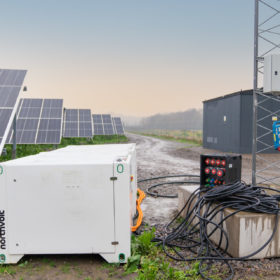
Alight to build 100 MW solar plant in Finland
Swedish solar developer Alight says it will enter the Finnish PV market for the first time early next year with a 100 MW ground-mounted solar park in Eurajoki. Alight COO Warren Campbell tells pv magazine that the array will be a ‘big project by Finnish standards.’
