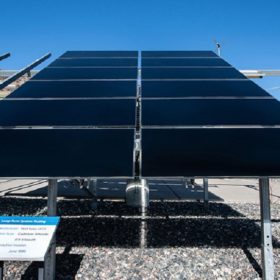
Paths to commercial success for renewable energy tech
Analysts have studied lab-to-market pathways for clean energy technologies, including First Solar’s cadmium-telluride thin-film solar modules.

Trina Solar unveils 425 W all-black solar module with 21.3% efficiency
China’s Trina Solar has developed an upgraded version of its Vertex S All Black PV module, with about 30 W of additional output. It is offering the new product on the Australian market.
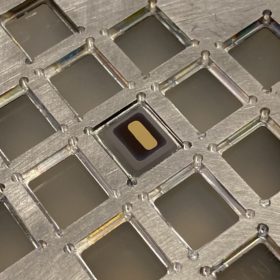
Selenium solar cell with 5.2% efficiency, 0.99 V open-circuit voltage
Danish researchers have built a selenium solar cell with the highest open-circuit voltage ever reported. They said that with further improvements in the optoelectronic quality of selenium, the device could reach an efficiency of up to 8%.

Chinese PV Industry Brief: Linyang Energy to build 20 GW TOPCon factory
Linyang Energy has revealed plans to build a new solar factory in Jiangsu province, while Daqo has said it will build a new silicon production base in Inner Mongolia.
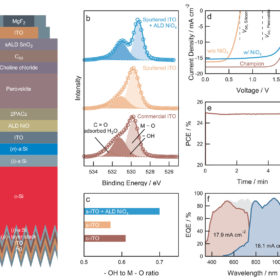
Monolithic perovskite-silicon tandem solar cells for water splitting
Researchers in the Netherlands have designed a water-splitting system with an electrochemical cell and a 25%-efficient tandem perovskite-silicon solar cell. It can reportedly achieve a solar-to-hydrogen efficiency rating of more than 21%.
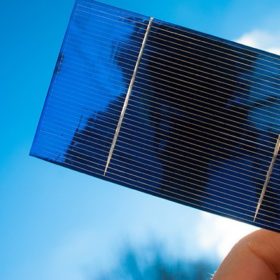
Thin-film tin sulfide solar cells with high open-circuit voltage
Japanese researchers claim that tin sulfide solar cells could achieve higher open-circuit voltages by preventing “Fermi level pinning” from occurring, due to the addition of a tin sulfide interface with large band bending.
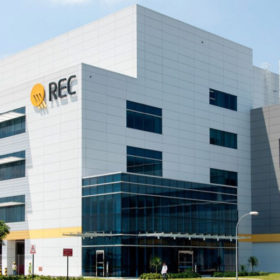
REC scraps plan to build 4 GW solar module factory in France
REC says it has dropped its plans to set up a factory in France due to “various market changes.” It wanted to invest €680 million ($716 million) to produce heterojunction solar modules in the town of Hambach.
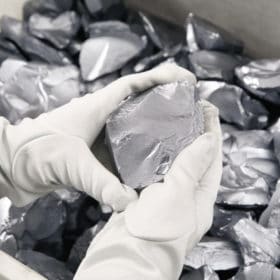
Australian supply chains would benefit from addressing modern slavery issue
Australia’s Clean Energy Council and law firm Norton Rose Fulbright have published a white paper arguing that the country’s renewable energy supply chains could “benefit significantly” from a concerted effort to address forced labor.
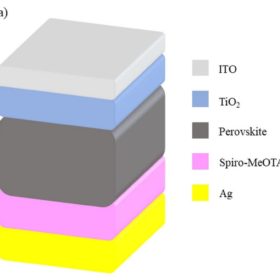
Natural-born p-doped material for pervoskite solar cells
Researchers in South Korea have found that molybdenum ditelluride could increase carrier generation in perovskite solar cells. They simulated a cell with a perovskite absorber and a layer made of the new material, and determined that its efficiency could exceed 20%.
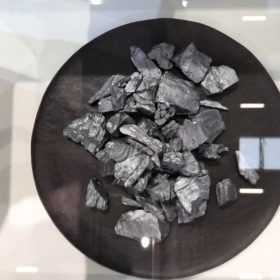
China launches industrial silicon futures
The China Securities Regulatory Commission (CSRC) has given the green light to the trading of industrial silicon futures on the Guangzhou Futures Exchange. The move could give polysilicon manufacturers the opportunity to hedge against fluctuating silicon metal prices.
