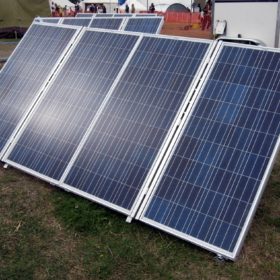
A new technique for cooling solar panels
Scientists in Egypt have investigated the effectiveness of using water and a mixture of aluminum oxide and calcium chloride hexahydrate to cool PV modules. Optimal performance was observed with a solution of 75% water, according to the research findings.
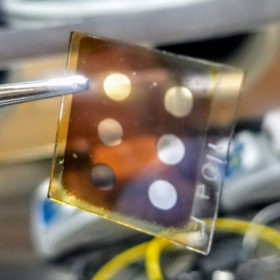
A flexible perovskite solar cell with 11.8% efficiency
U.S. researchers have created an inorganic mixed halide perovskite solar cell which they claim shows no thermal degradation even at 200 degrees Celsius for three days. The device can be used in tandem junction cells and is designed for use in real-life environments with high solar irradiation.

India installed 1.53 GW of rooftop solar in 2019
The country’s cumulative installed rooftop solar capacity reached 5.4 GW by the end of December. The Indian government now aims to deploy 40 GW of rooftop PV by the end of 2023.

The week in perovskites
As a focus of research at leading institutes the world over, new developments in the perovskite field come thick and fast almost every week. From x-ray observations on a nanoscale to financing and plans for mass production, pv magazine is bringing together some of the most exciting developments of recent weeks.
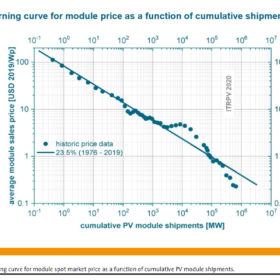
Solar costs set to continue falling according to ITRPV roadmap
The 11th edition of the German document which tracks solar price falls and efficiency improvements has considered the role bigger wafers are playing in cost reduction.

Single‐walled carbon nanotubes for more efficient III‐V solar cells
Russian researchers have improved the efficiency of a thin-fim GaAs‐based solar cell by 0.9% by applying single‐walled carbon nanotubes as the topmost layer. The cell also showed a slight increase in the short circuit current density, from 16.9 to 17.9 mA/cm2.

New manufacturing technique for 26%-efficient tandem perovskite solar cell
U.S. scientists have demonstrated a perovskite-silicon tandem cell they claim has low reflectance losses and strong potential for commercial production. The tandem architecture involves a manufacturing process featuring the solution-based blading of perovskites onto textured silicon wafers.
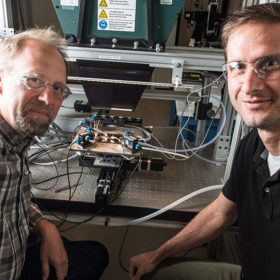
Six-junction III–V solar cell with 47.1% efficiency
A U.S. research group has developed a new solar cell, based on six active photoactive layers, to capture light from a specific part of the solar spectrum. The scientists claim that they could potentially reach a 50% efficiency rate with the new cell.
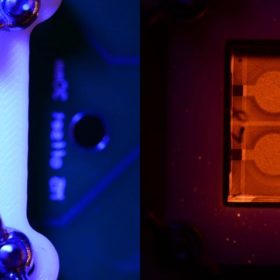
Shine! You’re on photoluminescence camera!
Researchers in Australia and China used intensity-modulated photoluminescence to map the series resistance of perovskite solar cells with a technique which could further understanding of the causes of instability issues in such devices.
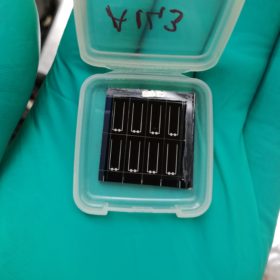
New process for kesterite solar cells with 10% efficiency
German scientists have developed a new process for the formation of a phase pure kesterite Cu2ZnSnSe4 (CZTSe), which they claim can improve the material homogeneity and suppress the well-known issue of tin losses. The new technique is based on stacked elemental and alloyed precursors with a Zn/Cu-Sn/Zn precursor structure.
