Shingled solar modules and shading
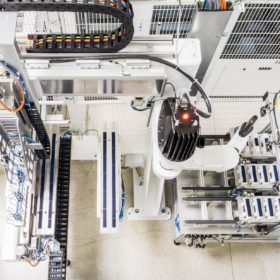
Scientists at Germany’s Fraunhofer Insititute for Solar Energy Systems (ISE) evaluated the performance of its newly introduced ‘Matrix’ approach to interconnecting shingled solar cells. The institute finds that, thanks to optimized current flows, energy yield of the Matrix approach could almost double that of standard shingled cell interconnection under random shading conditions.
Novel solar cell architecture to reduce silver costs, improve voltage
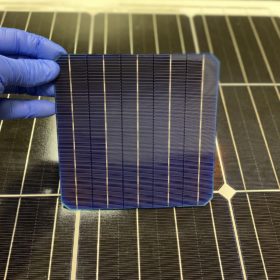
Developed by a U.S.-based start-up, the new manufacturing process is claimed to reduce silver consumption and improve solar module performance by up to 3 W. It consists of connecting sub-cells in series within a single cell in order to increase the device voltage and without requiring cells to be physically broken and rewired.

Hanwha Solutions buys 16.67% stake in REC Silicon
The investment made by the South Korean group should help REC Silicon restart polysilicon production at its US factory in Moses Lake in 2023.
New optimizations for a 24.5% efficient heterojunction solar cell
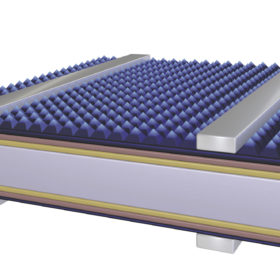
Scientists in Germany analyzed the main sources of performance loss in a silicon heterojunction cell, and developed several optimization strategies to improve overall performance. By adding a second layer of amorphous silicon at the rear of the device, and a magnesium fluoride anti-reflective layer, they were able to boost cell efficiency by around 1% to reach 24.51%.
European consortium develops pilot line for complete PV module recycling
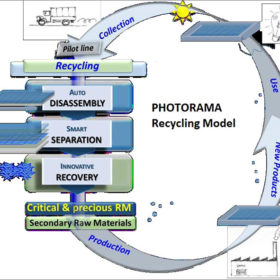
A European consortium consisting of Italian energy agency Enea and the French Alternative Energies and Atomic Energy Commission, among other entities, has developed a plan to build a low-emissions pilot line to recover critical and precious metals such as silicon, indium, gallium and silver. The line will be designed to reintroduce new materials and new products into the production cycle.
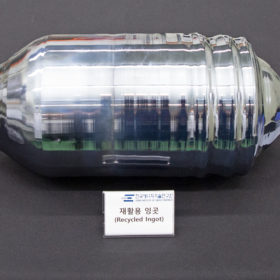
New tech to produce ultra-thin wafers with minimal silicon waste
South Korean researchers have developed a process to produce ultra-thin wafers without sacrificing any of the substrates. Their technique is based on a new approach involving the use of plasma-assisted epitaxial growth, in order to increase internal defects and porosity, rather than reduce them.
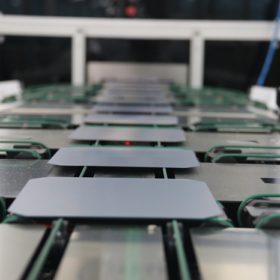
Chinese PV Industry Brief: Shuangliang secures another major wafer supply deal
The Chint group has also agreed to sell a portfolio of distributed solar projects with a capacity of 493 MW.

Hydrophobic anti-soiling coating for solar modules
A U.K. research group is developing an anti-soiling solution produced via a chemical process compatible with glass manufacturing. The Engineering and Physical Sciences Research Council is providing $1.6 million of funding for the project.

Indian transformer manufacturer to set up 4 GW solar fab
Shirdi Sai Electricals, an Indian transformer manufacturer and EPC contractor, has placed a $252.16 million incentive bid to set up a fully integrated, 4 GW polysilicon-to-module fab under the Indian government’s production-linked incentives scheme.
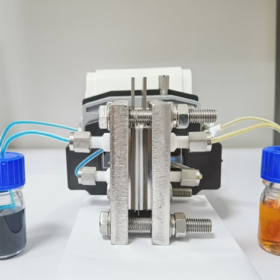
Redox flow battery with capacity retention of 99.98% per cycle
The battery was fabricated by Chinese scientists with a low-cost electrolyte made of a derivative of TEMPO, which is a well-known electroactive aminoxyl radical used with several applications in chemistry and biochemistry. According to the researchers, the battery shows high redox potential and is crossover-free.
