
Keeping track of chlorine in perovskite stability
Scientists in Japan delved deep into the crystalline structure of a perovskite solar cell in order to understand how chlorine helps to improve the cells’ stability. By varying the concentration of chlorine in the material they were able to find an optimal level for increased stability, and open new doors on the way to understanding the specific role of chlorine and the mechanism behind the improvement.

EUPVSEC 2021 – Key takeaways
Now in its 38th year, and its second as a fully virtual event, the 2021 EU PVSEC conference revealed a solar industry and research community filled with confidence. Discussions at the event began with the expectation that demand for solar will continue to grow rapidly, and focused on the challenges of further scaling up production and deployment, and ensuring that energy systems can run smoothly with solar and wind as their main source of energy.
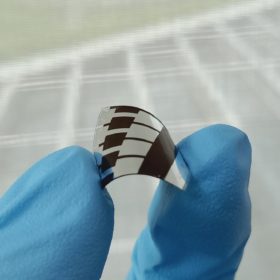
Co-evaporated perovskite solar cell with 20.6% efficiency
Researchers in Singapore have built what they claim is the industry’s most efficient, large-area co-evaporated solar cell. According to their findings, the device has exhibited remarkable thermal stability and could reach commercial maturity within the next few years.
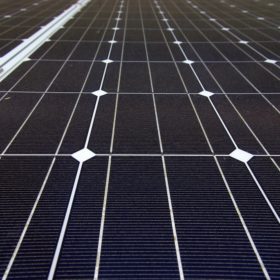
Cooling PV panels with water and cotton mesh
Scientists in Russia have developed an active cooling technique that spreads water on both sides of the module and uses a cotton wick mesh to absorb and spread the water that comes on the rear side. The system is able to reduce significantly a module’s operating temperature and lead to an overall improvement of 30.3% in its output power.

Australian startup sets 25.54% efficiency record for silicon cell
SunDrive said it has created the most effective commercial-sized silicon solar cell in the world, achieving an efficiency figure of 25.54% in testing carried out by Germany’s Institute for Solar Energy Research (ISFH).
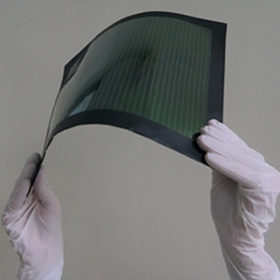
Toshiba claims 15.1% efficiency for polymer film-based large-area perovskite solar module
The result is claimed to be the highest efficiency ever reached for a large-area, polymer film-based perovskite photovoltaic module. The device has an area of 703 square centimeters and was fabricated through a new coating method.
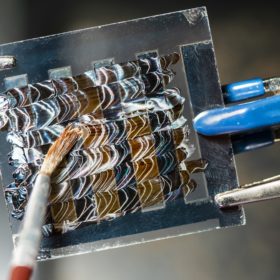
NREL scientists test back-contact architecture on perovskite solar cells
Scientists in the United States explored the use of all back contact architectures for perovskite solar cells. The group notes several advantages to this strategy, as well as challenges to overcome. Ultimately, the work outlines a route to cell efficiencies better than 20%.
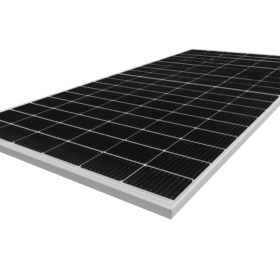
JA Solar, JinkoSolar, Longi reach consensus on 182mm module standardization
The three Chinese panel manufacturers found an agreement on the module size and the mounting hole spacing.

What seawater and salt spray can do to a PV system
Researchers in China have analyzed how the marine environment influences the performance of PV modules deployed on ships, and have found that salt particles can be detrimental to their performance as these act as both heating agents and a factor reducing solar irradiance. The temporary cooling effect provided by seawater is not sufficient to offset the impacts of salt spray and ensure increased power yields.
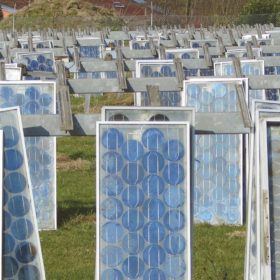
India may host massive amounts of PV module waste by 2030
India’s solar capacity growth up to 2030 also means the accumulation of a significant amount of PV module waste due to early failures or damage during transportation, installation, and operation. The waste generation could be 21 kilotons, assuming India’s cumulative installed PV capacity grows to 287.4 GW by 2030, from 40 GW in 2020. This doesn’t include end-of-life panel waste, as PV systems installed in the 2020-30 period are assumed to have at least 30 years of lifetime.
