
The weekend read: New technologies mean new approaches
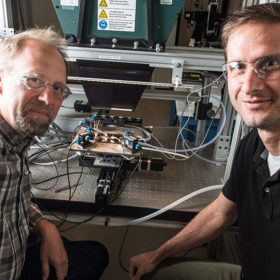
Measuring the performance of a solar cell is a tricky affair, and even more so for new technologies such as perovskites and tandem cells. In the laboratory, these are measured over a period of several minutes to ensure accurate characterization. But as technology continues its journey toward commercial production, ensuring an accurate power rating without slowing down the manufacturing process presents a new challenge both for suppliers of flash testing equipment and those working on bringing perovskite solar cells and tandem devices featuring them to market.
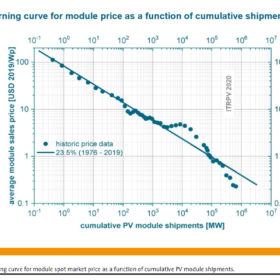
Solar costs set to continue falling according to ITRPV roadmap
The 11th edition of the German document which tracks solar price falls and efficiency improvements has considered the role bigger wafers are playing in cost reduction.

Ministry representative says Polish solar manufacturers could benefit from Covid-19 disruption to take market share from Chinese rivals
The Polish solar industry is reportedly planning an offensive to claim a bigger slice of the domestic PV market. The idea was apparently floated by the head of a private renewable energy body.

Single‐walled carbon nanotubes for more efficient III‐V solar cells
Russian researchers have improved the efficiency of a thin-fim GaAs‐based solar cell by 0.9% by applying single‐walled carbon nanotubes as the topmost layer. The cell also showed a slight increase in the short circuit current density, from 16.9 to 17.9 mA/cm2.

Australian researchers take solar windows to the next level
The building-integrated PV devices have taken a big leap forward on the back of a partnership between Australian scientists and a major glass manufacturer which will investigate the use of semi-transparent solar cells in commercial applications, potentially revolutionizing building design.

New manufacturing technique for 26%-efficient tandem perovskite solar cell
U.S. scientists have demonstrated a perovskite-silicon tandem cell they claim has low reflectance losses and strong potential for commercial production. The tandem architecture involves a manufacturing process featuring the solution-based blading of perovskites onto textured silicon wafers.
Six-junction III–V solar cell with 47.1% efficiency
A U.S. research group has developed a new solar cell, based on six active photoactive layers, to capture light from a specific part of the solar spectrum. The scientists claim that they could potentially reach a 50% efficiency rate with the new cell.
Shine! You’re on photoluminescence camera!
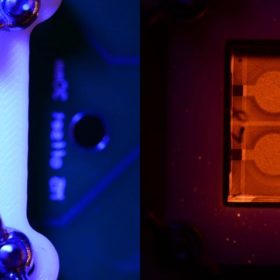
Researchers in Australia and China used intensity-modulated photoluminescence to map the series resistance of perovskite solar cells with a technique which could further understanding of the causes of instability issues in such devices.
New process for kesterite solar cells with 10% efficiency
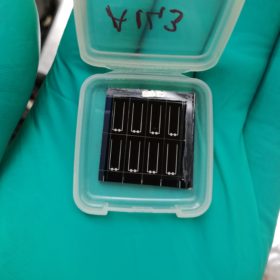
German scientists have developed a new process for the formation of a phase pure kesterite Cu2ZnSnSe4 (CZTSe), which they claim can improve the material homogeneity and suppress the well-known issue of tin losses. The new technique is based on stacked elemental and alloyed precursors with a Zn/Cu-Sn/Zn precursor structure.
No such thing as ‘next-generation’ modules
According to one Dutch scientist, the development of PV technology in recent decades should be seen as an evolutionary process, rather than the constant emergence of new generations of equipment.
