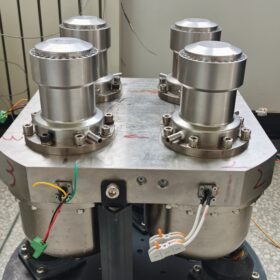
Chinese scientists unveil thermoacoustic ultra-high temperature heat pump prototype
Researchers at the Chinese Academy of Sciences developed a thermoacoustic Stirling heat pump prototype that offers high thermal performance, a peak coefficient of performance of 1.68, and potential applications in high-temperature industrial processes, enabling zero-carbon heating for sectors like petrochemicals and metallurgy.
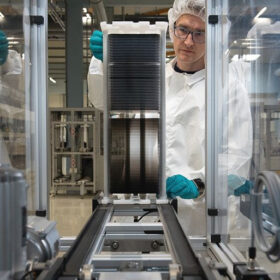
The impact of transparent conductive electrodes on perovskite-silicon tandem solar cell performance
An Oxford researcher has found that transparent conducting electrodes can reduce perovskite–silicon tandem solar cell efficiency by over 2%, with losses linked to electrical resistance, optical effects, and geometric trade-offs. Using a unified optical–electrical model, the scientist showed how careful optimization of TCE stacks, coatings, and cell design is critical to closing the gap toward the 37%–38% efficiency frontier.
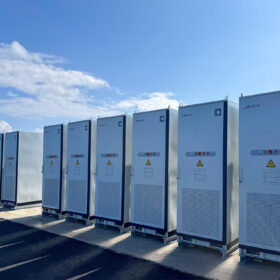
JA Solar expands into energy storage with new subsidiary
The Chinese PV manufacturer is stepping up its energy storage push with a new Beijing subsidiary capitalized at RMB 300 million ($42 million).

Incat powers up world’s largest battery-electric ship
Australian shipbuilder Incat Tasmania has powered up the world’s largest battery-electric ship – and the largest electric vehicle of any type on the planet – and successfully completed its first e-motor trial in Hobart.
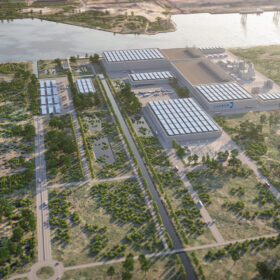
Longi backs Carbon’s shift to GW-scale solar production in France
France-based startup Carbon plans to partner with Chinese manufacturer Longi and adopt back-contact (BC) solar technology as it revises its roadmap for a gigawatt-scale solar module factory.

Key takeaways from France’s Energaia trade show
France’s Energaia trade fair drew record crowds and exhibitors last week, underscoring continued investment appetite in solar and storage, even as developers warn that policy delays and a residential slowdown could weigh on activity after 2025.

France pulls reduced VAT status from four DMEGC solar modules
France’s certification body says it has withdrawn eligibility for a lower solar VAT rate from four Chinese-made modules after finding traceability errors that altered their carbon footprint calculations.

Ford launches battery storage business, repurposing EV manufacturing capacity
The automotive giant will leverage its plants in Kentucky and Michigan, along with its lithium iron phosphate (LFP) technology know-how, to provide solutions for energy infrastructure and the expanding data center market. The company plans to begin shipping battery energy storage systems (BESS) in 2027.

The impact of laser-assisted firing on TOPCon solar cell performance
UNSW and Jolywood studied the thermal stability of laser-assisted fired TOPCon solar cells during module fabrication and high-temperature stress, identifying hydrogen-related defect dynamics as the key factor behind degradation and recovery. They found lamination causes temporary efficiency losses that self-recover under light exposure, while optimized LAF can restore degraded contacts, providing practical guidance for reliable module manufacturing and testing.
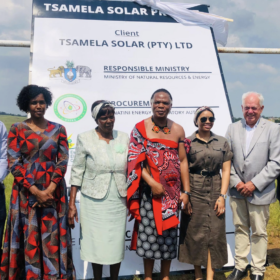
Eswatini starts 20 MW solar project
Eswatini has launched a 20 MW solar project, the first in a series of five expected to add 75 MW of new capacity.
