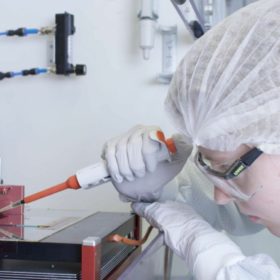
Eco-friendly solvent for a 16.7% perovskite solar cell
Scientists in Germany looked to eliminate the use of toxic solvents in the production of perovskite solar cells, replacing them with a more environmentally material called dimethyl sulfoxide (DMSO) which has so far proved difficult to integrate into processes suitable for large-scale production. The group demonstrated a scalable blade coating process using DMSO as the only solvent, and reached cell efficiencies close to those achieved using more toxic substances.

Greece to launch 1 GW renewables tender in September
The Greek energy regulator has published the details of a 1 GW joint renewable power tender scheduled for September. The nation has planned a number of additional competitive tenders up to 2024, in order to procure about 3 GW of renewables, including energy storage.
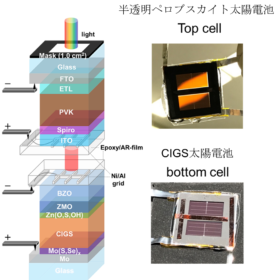
Four-terminal tandem perovskite/CIGS solar cell with 26.2% efficiency
Japanese scientists have developed a tandem device with a 19.5%-efficient perovskite top cell. They claim to have created a semi-transparent perovskite solar cell while maintaining high performance.

Shipping costs remain key challenge for solar sector
The solar industry will face elevated shipping costs and supply disruptions for at least another year until the global ocean freight system starts to normalize.

Energy Toolbase launches PPA generator platform for solar, storage
US commercial, industrial, and non-profit solar developers can now generate power purchase agreements via Sustainable Capital Finance’s developer platform.

Australian developer begins work on 1.2 GW wind-solar hub
Squadron Energy has started building a 1.2 GW hybrid wind, solar and battery energy storage project in the Australian state of Queensland.

Trina Solar achieves 24.5% efficiency for 210 mm p-type PERC solar cell
Trina Solar said the State Key Laboratory of PV Science and Technology in China has confirmed the efficiency rating of its latest solar panel.
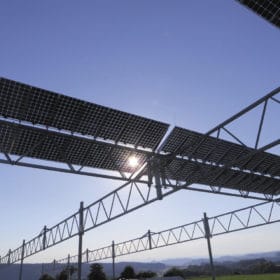
New method to evaluate performance, LCOE of elevated agrivoltaics
Scientists in Belgium have developed a way to assess elevated agrivoltaic projects, by calculating key performance indicators such as energy yield and levelized cost of energy (LCOE). They have found that shade-tolerant crops such as potatoes could potentially be paired with around 1,290 GW of PV capacity in Europe.
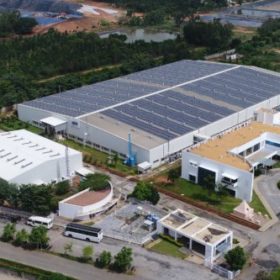
India’s Emmvee eyes wafer-to-module production
India’s Emmvee Photovoltaic has a 1.25 GW module manufacturing facility that can produce polycrystalline and mono PERC solar panels, with the ability to upgrade to TOPCon. By the end of 2023, it plans to raise its PV module capacity to 3 GW.
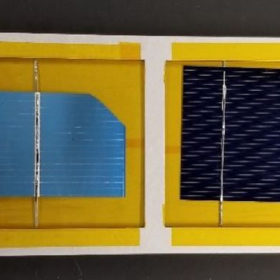
Role of UV in solar cell degradation
US scientists have tested a range of modern cell designs under strong ultraviolet light and have found that many of them, including p-type PERC and n-type heterojunction cells, are more susceptible to degradation than older back surface field designs. They noted that the rear side of bifacial cells may be particularly vulnerable.
