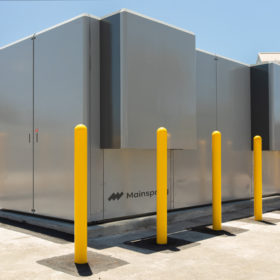
Linear generator running on hydrogen, ammonia
Mainspring Energy, a US linear generator specialist, has adapted its technology so its generators can run on hydrogen and ammonia. It said the generators can ramp up and down quickly via solar, with the ability to dynamically switch between different kinds of fuels.

Four-mode hydrogen plant to accommodate renewables
Bio-FlexGen, an EU research project, seeks to develop a combined heat and power plant (CHP) system with hourly, daily and seasonal flexibility via hydrogen production from biomass.
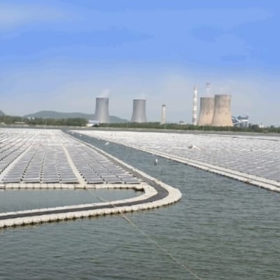
India’s largest floating PV plant goes online
Tata Power’s engineering, procurement and construction unit has commissioned a 101.6 MWp floating solar project in the Indian state of Kerala.
DMEGC launches M10 rooftop solar modules with 410 W of output
China’s DMEGC has released new solar panels with power conversion efficiencies of up to 21.2% and temperature coefficients of -0.33% per degree Celsius. They can be used with maximum system voltages of 1,000 V or 1,500 V.

CEA-INES develops 18.95%-efficient flexible perovskite solar panels
French researchers have developed PV modules with an area of 11.6 square centimeters for indoor applications. They said the achieved efficiency level marks a world record for a flexible perovskite device larger than 10 square centimeters.
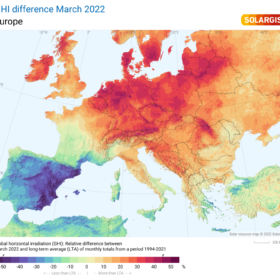
Spain hit by biggest solar radiation decline in 28 years in March
Spain recorded a 50% decrease in solar radiation due to bad weather in March – the biggest decline since the beginning of satellite records in 1994. By contrast, irradiation levels in Germany and the Balkans were 45% higher during the same period.
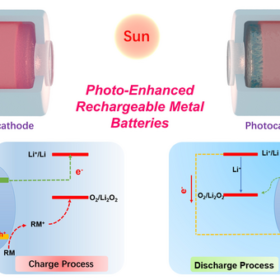
Photon-enhanched rechargeable batteries for solar storage
Japanese scientists have analyzed storage systems that combine PV and high-energy-density metal batteries. The rechargeable batteries have advantages such as low-charge voltage and high energy density, but stability and safety must be addressed before they reach commercial maturity.
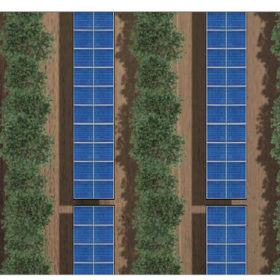
Historical court ruling for agrivoltaics in Italy
The Regional Court of Apulia in Italy has ruled that the regional authorities must not deny permits to solar projects on agricultural land without considering how they combine electricity generation with crop cultivation and the raising of livestock. pv magazine spoke to Emilio Sani from law firm Sani Zangrando about the ruling’s potential consequences.
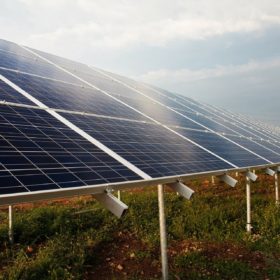
Conflicting authorities could delay planning, environmental permits for solar in France
Municipal, regional and national authorities in France often have different views on permits for the deployment of solar. Marie Buchet, head of solar power at Syndicat des énergies renouvelables, spoke to pv magazine about four case studies. She said one-stop shops to unify all authorization processes could be the solution, as suggested by the European Union.

Up to 3 years needed to develop PV projects in Germany
Approvals and planning procedures for solar parks are a major bottleneck for the energy transition. pv magazine recently spoke with a project developer about constraints and opportunities in Germany, ahead of the pv magazine Roundtables on June 28.
