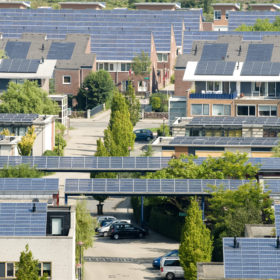
New on-demand rooftop solar investment platform
Legends Rooftop is an online tool that allows investors to purchase off-site rooftop solar panels as a financial investment.
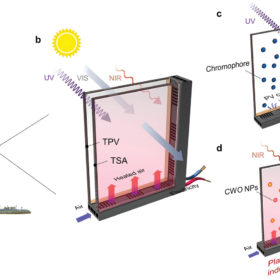
Solar window generates electricity, thermal energy
A research team in Hong Kong has built a solar window that can generate power on the external side via a luminescent solar concentrator and thermal energy on the internal side via transparent solar absorbers.
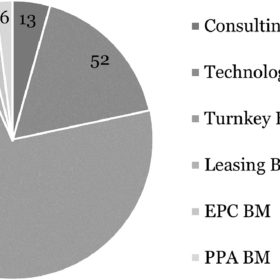
Business models for Swedish solar
Swedish researchers have identified six business models for the country’s solar market and highlighted how companies differ significantly in their approaches from policymakers and scientists. They analyzed data from 241 solar companies.

Japan allocates 153.7 MW in solar auction
Japan’s latest procurement exercise was open to PV projects above 250 kW in size. The ceiling price was set at JPY 10 ($0.074)/kWh.
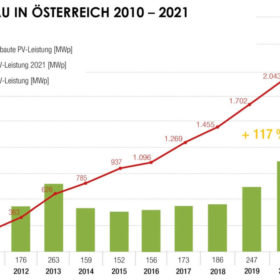
Austria added 740 MW of solar in 2021
Austria’s cumulative installed PV capacity has now surpassed 2.78 GW.

Open-source online platform shows how Europe may become energy-independent with renewables by 2050
European researchers have developed an open-source online tool that can identify areas where renewable energy and synthetic fuels can be cost-effectively produced, where hydrogen hubs could be built, and where grid expansion is needed. It can be used in different sectors across 35 countries.
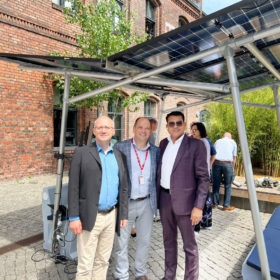
Servotech tests solar monitoring device along with PV Port in Germany
Servotech has successfully tested its ComPort solar monitoring device with the PV Port portable PV system at the EUREF-Campus in Berlin.
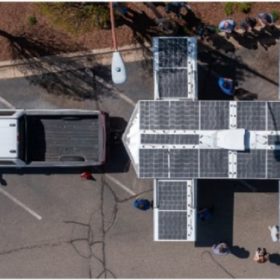
Mobile nanogrids powered by solar, green hydrogen
Climate resilience solutions come prefabricated to generate clean, off-grid power for essential services and emergency response needs.
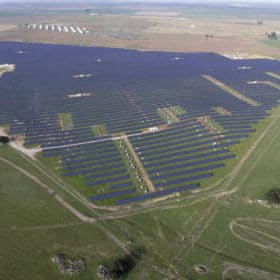
Portuguese industry group preparing licensing guide for onshore renewables
Portugal’s main renewables industry group is preparing a licensing guide for onshore energy projects. It aims to simplify and clarify all stages of the licensing process in order to expedite the implementation of solar and wind projects.
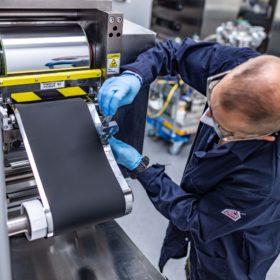
US startup unveils non-flammable batteries for EVs, storage
Alsym will produce its new batteries – made of readily available materials, without lithium or cobalt – for electric vehicles, stationary storage, and marine applications.
